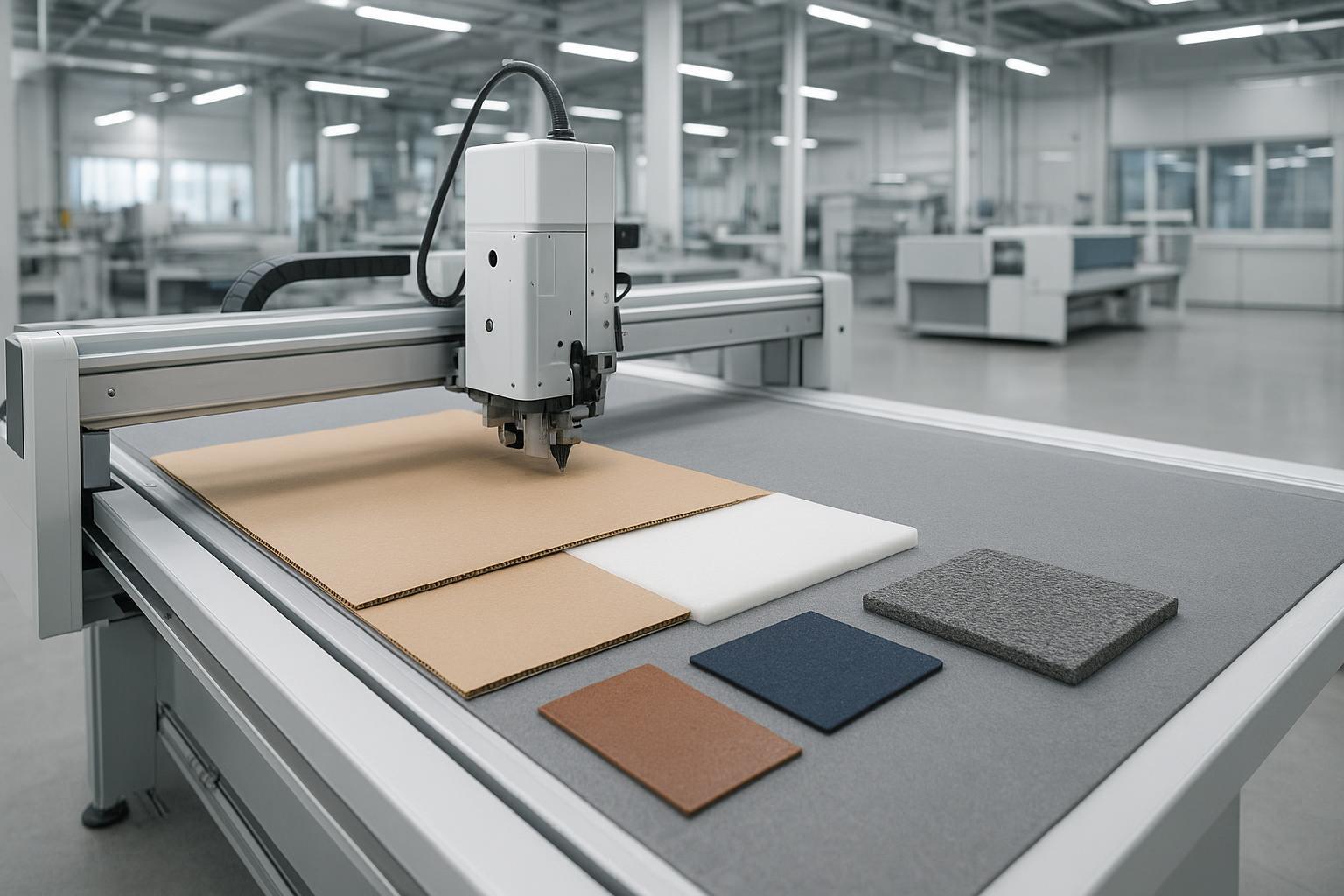
If you’re searching for “cnc knife cutter” or an “oscillating knife cutting machine,” you’re usually not trying to learn what a blade is.
You’re trying to answer a more expensive question:
- Should I cut this material with a knife, a CNC router, or a laser?
- Will it deform, fray, melt, smoke, or burn?
- Do I need a drag knife, oscillating knife, tangential knife, or a creasing wheel?
This guide is built to help you choose the right process for the material—and avoid the common mistake of treating a knife cutter like a woodworking CNC router.
What is a CNC knife cutter?
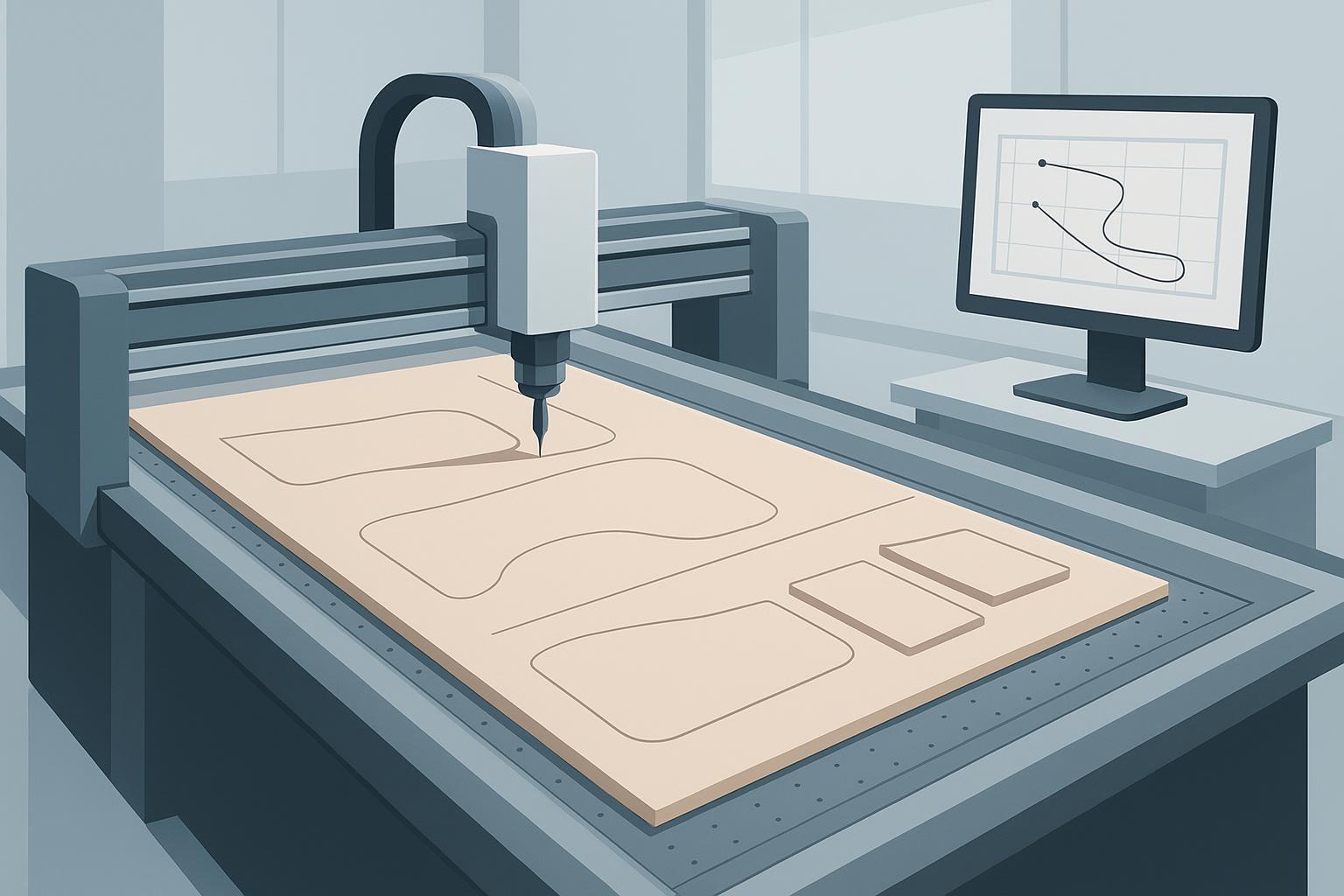
A CNC knife cutter (also called a digital knife cutting machine) is a computer-controlled cutting machine that uses blades (instead of a rotating router bit or a laser beam) to cut soft, flexible, fibrous, and semi-rigid sheet materials.
In practical shops, CNC knife cutters are commonly used for:
- Foam, EVA/EPE/PE foam, sponge
- Corrugated cardboard and packaging prototypes
- Leather, fabric, felt, non-woven textiles
- Rubber and some gasket materials
- PET acoustic panels and other semi-rigid sheets
- Many signage and display boards that don’t cut well with heat
A useful way to remember the boundary:
- CNC router = rotating cutting (chips/dust)
- Laser cutter = thermal cutting (heat/smoke/edge effects)
- CNC knife cutter = cold blade cutting (less heat effect on many soft materials)
For a high-level overview of knife-cutting technology for flexible and semi-rigid materials, MecaNumeric provides a clear explanation of CNC knife cutting.
What is an oscillating knife cutting machine?
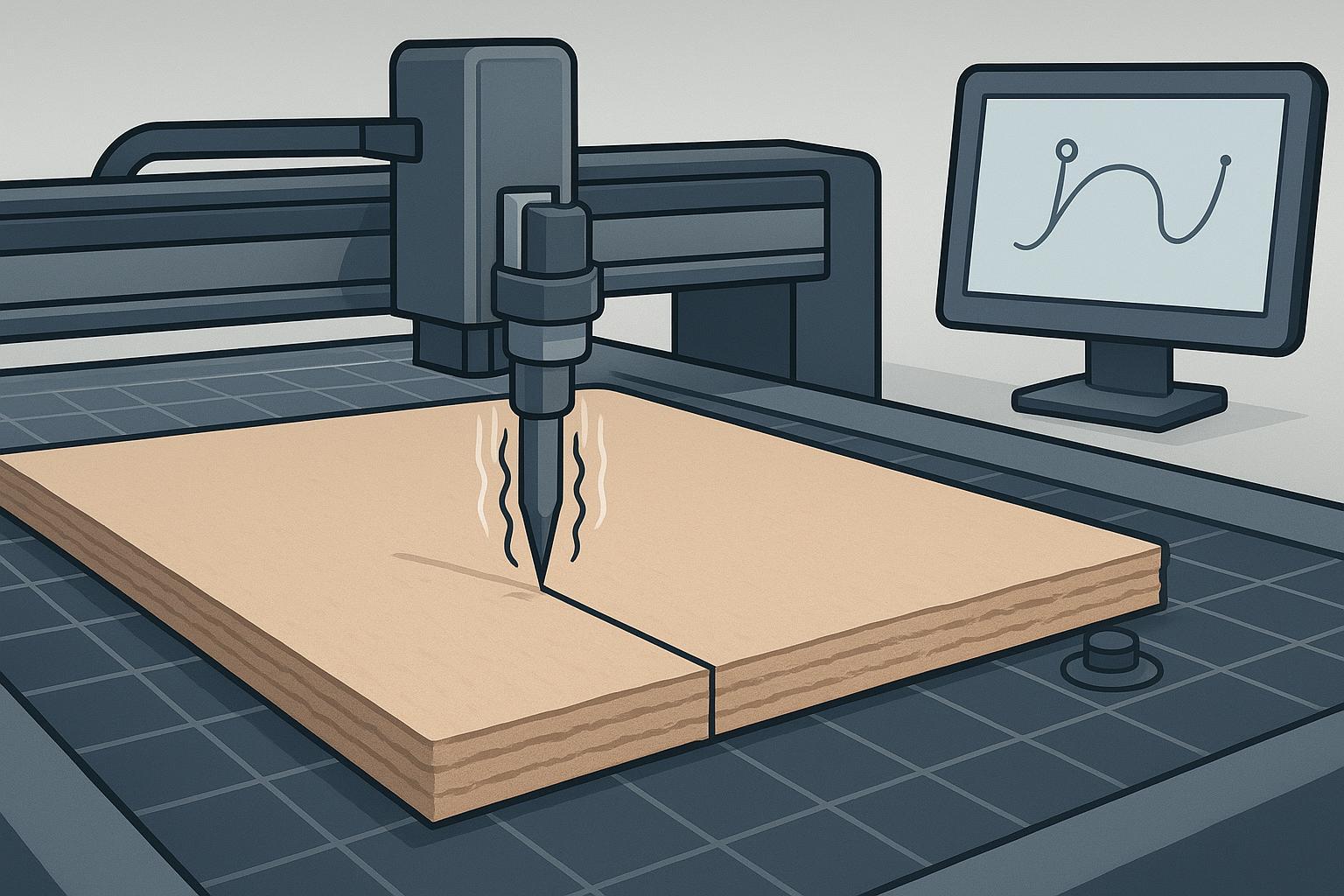
An oscillating knife cutting machine is a CNC knife cutter that uses a powered blade moving rapidly up and down while the CNC system follows a programmed toolpath.
That up-and-down motion matters because it often:
- Reduces dragging and pulling on soft materials
- Helps cut thicker, softer, or fibrous materials more cleanly
- Lowers the chance of tearing, fraying, or distorting the sheet
Oscillating knife vs drag knife (quick intuition)
A drag knife is like pulling a utility knife through a sheet.
An oscillating knife is closer to “micro-slicing” as it advances—often better when the material is thicker, softer, or more fibrous.
What materials can a CNC knife cutter cut? (practical fit table)
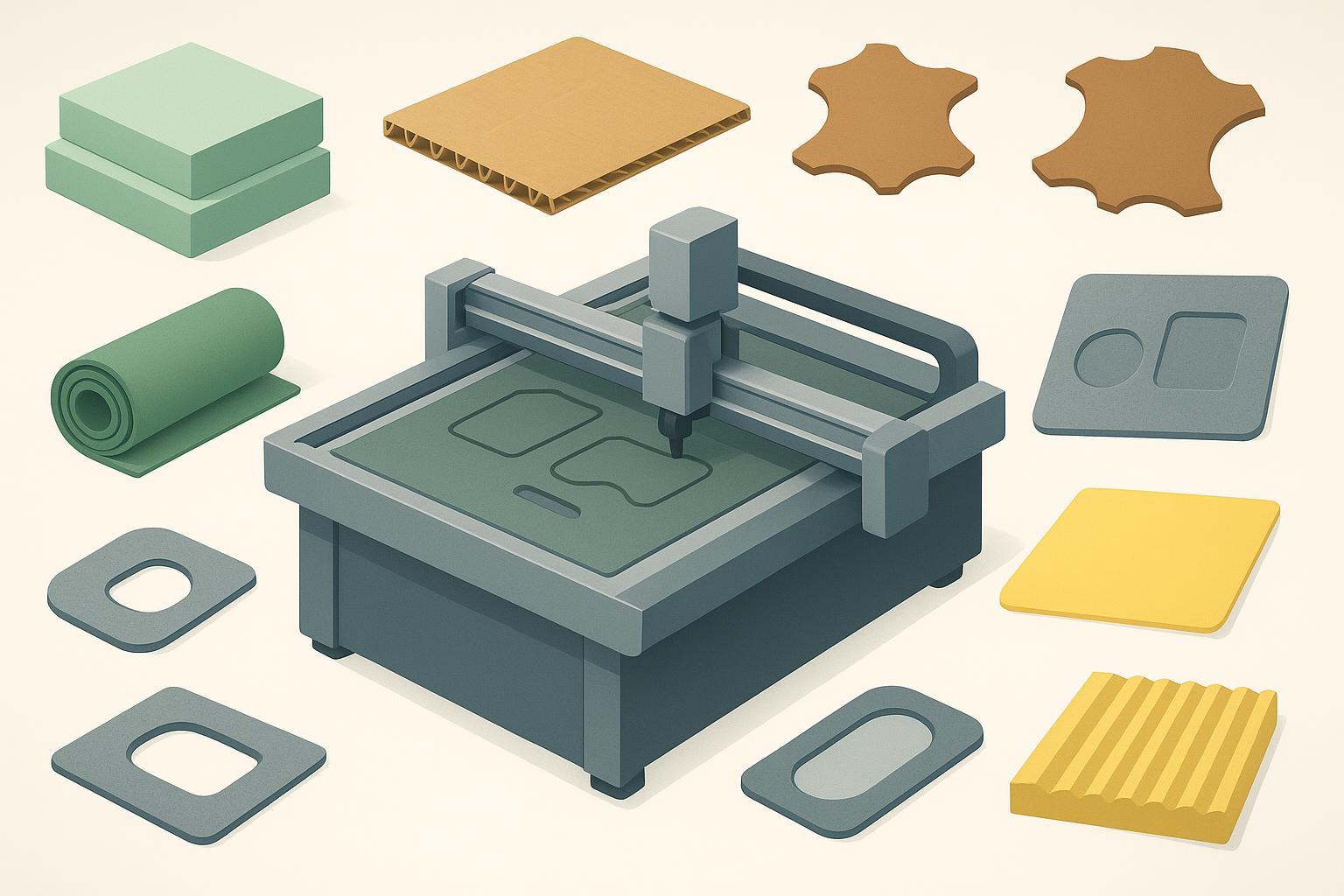
CNC knife cutters are designed for soft to semi-rigid sheets. This table is the fastest way to self-qualify.
Material | Fit for CNC knife cutter | Typical applications | Notes on tooling |
|---|---|---|---|
Foam / sponge | Excellent | Packaging inserts, cushioning, mockups, pads | Oscillating knife usually preferred for thicker foam |
EVA / EPE / PE foam | Excellent | Tool case inserts, protective packaging, end caps | Oscillating knife; sometimes bevel/V-cut for presentation edges |
Corrugated cardboard | Excellent | Custom boxes, packaging samples, POS displays | Pair cutting with a creasing wheel |
Honeycomb board | Good | Packaging, display panels | Depends on density/thickness; test cut recommended |
Leather | Excellent | Upholstery covers, bags, auto interiors | Oscillating or tangential knife for control |
Fabric / textile | Excellent | Upholstery, soft goods, patterns | Oscillating helps reduce fraying/pulling |
Felt / non-woven | Good | Insulation parts, decorative panels | Oscillating/tangential depending on thickness |
PET acoustic panel | Good | Acoustic wall panels, office partitions | Tooling + hold-down matter; test cuts recommended |
Rubber / silicone | Good | Seals, gaskets, industrial pads | Often better with oscillating/tangential depending on hardness |
PVC foam board / KT board | Good (material-dependent) | Sign boards, displays, prototypes | Knife for many jobs; router for some harder boards |
Vinyl / stickers / thin films | Good | Decals, labels, masking films | Drag knife often sufficient |
MDF / plywood / solid wood | Usually poor | Structural woodworking parts | Use a CNC router instead |
Acrylic (PMMA) | Usually not first choice | Letters, engraving, rigid signage | Often better with CO2 laser or router depending on finish |
Metal sheet | Not suitable | Panels, brackets | Use fiber laser, plasma, waterjet, or metal CNC |
Key takeaway: CNC knife cutters excel at soft, flexible, fibrous, and semi-rigid materials. They are generally not used for cutting MDF cabinet panels, plywood furniture parts, or metal plates.
Tooling 101: drag knife, oscillating knife, tangential knife, and creasing wheel
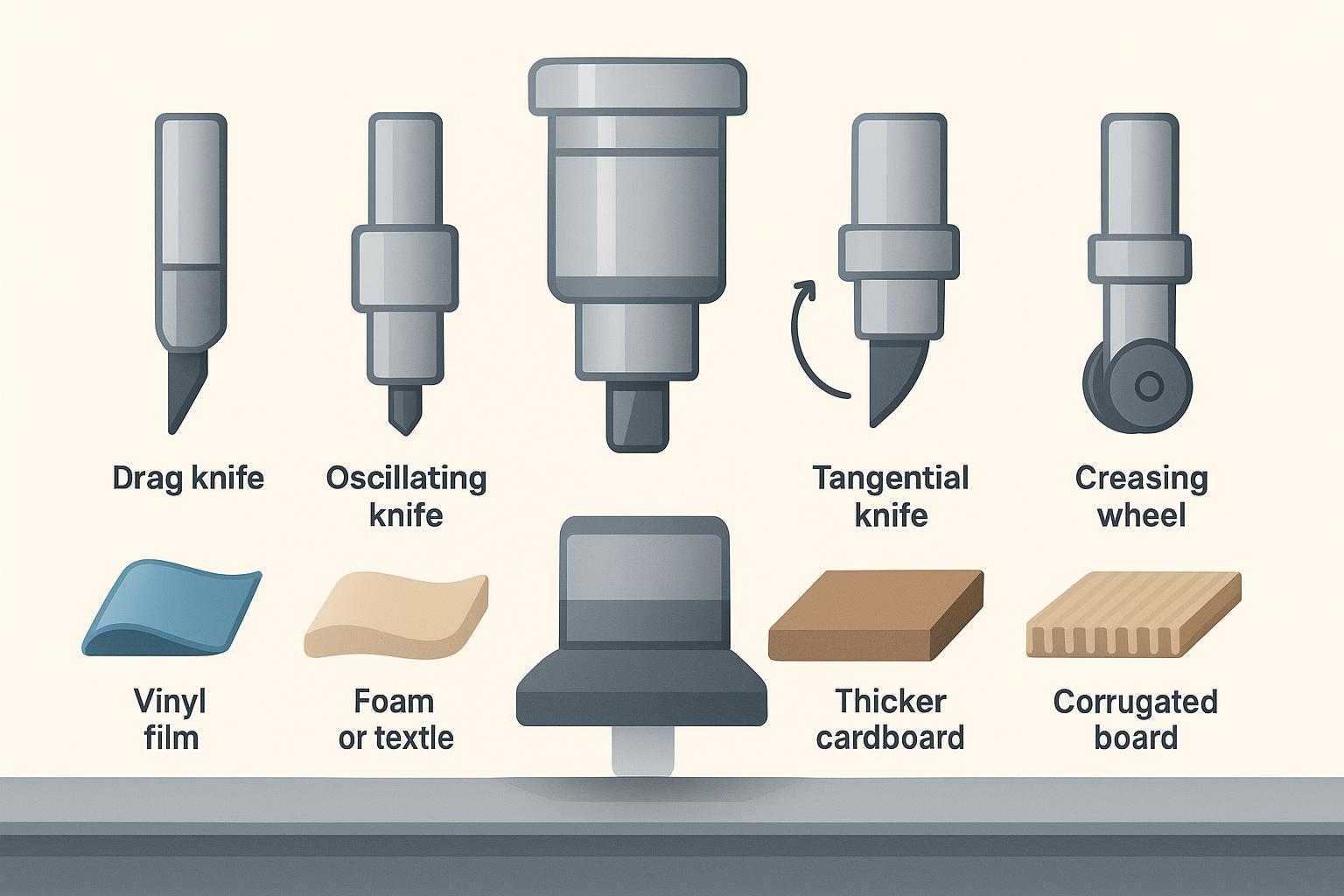
Buyers often focus on the table size or motor power—then regret it when the tooling doesn’t match the real materials.
Here’s a practical way to think about the main tool types.
Tool type | How it works | Best for | What to watch |
|---|---|---|---|
Oscillating knife | Powered blade moves up/down rapidly | Foam, corrugated cardboard, leather, fabric, PET acoustic panels, rubber | Needs correct blade + settings; hold-down matters |
Drag knife | Passive blade is dragged/pulled through material | Vinyl, stickers, paper, thin films, thin cardboard | Corners and thick fibrous materials can be less stable |
Tangential knife | Blade direction is actively controlled (lift/rotate/insert) | Thicker cardboard, gasket materials, leather, technical textiles | More complex tooling, but strong corner control |
Creasing wheel | Presses fold lines (scores) rather than cutting through | Corrugated cardboard boxes, folding cartons, packaging blanks | Must match flute/board; crease pressure setup matters |
V-cut / bevel knife | Cuts angled edges | Foam board, display boards, presentation edges | Specialized for board finishing |
Marking / punching tools | Marks positions or adds holes | Packaging prototypes, leather patterns, production marking | Useful for prototypes and repeatable assembly |
For a simple explanation of why creasing tools matter in digital cutting workflows, FESPA’s guide includes a clear section on the creasing wheel and its applications.
CNC knife cutter vs CNC router (the boundary most buyers get wrong)
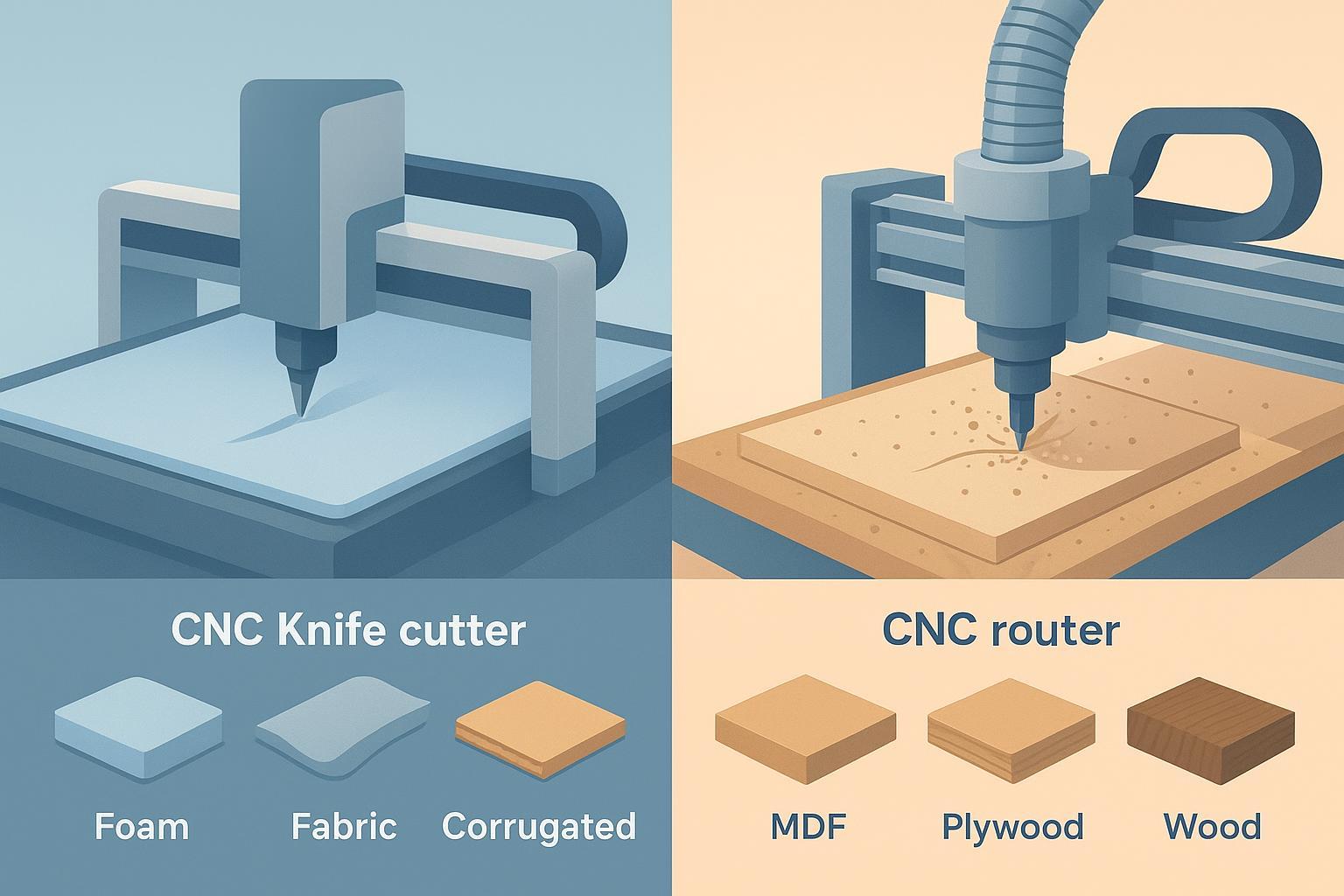
A CNC knife cutter is not a “better woodworking CNC router.” It’s a different process built for different materials.
Comparison item | CNC knife cutter | CNC router |
|---|---|---|
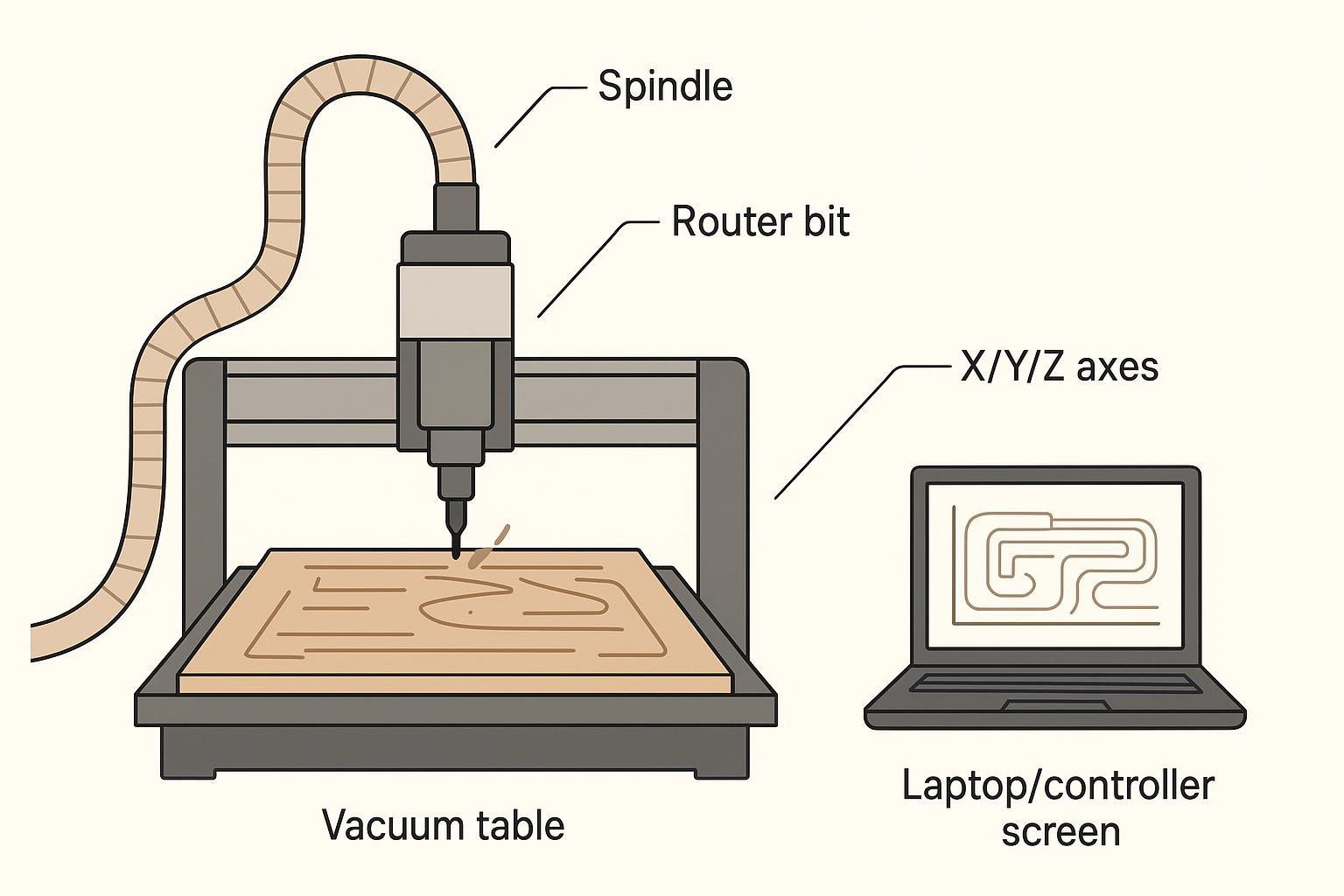
Cutting method | Blade cutting (often oscillating/tangential) | High-speed rotating spindle (milling/routing) |
Best materials | Soft/flexible/fibrous/semi-rigid sheets | Wood, MDF, plywood, many plastics; some composites |
Soft material edge quality | Often cleaner, less tearing/fraying | Can tear, pull, melt, or fuzz soft/fibrous sheets |
Wood panel cutting | Usually not suitable | Strong fit for panel cutting, grooves, drilling, 3D carving |
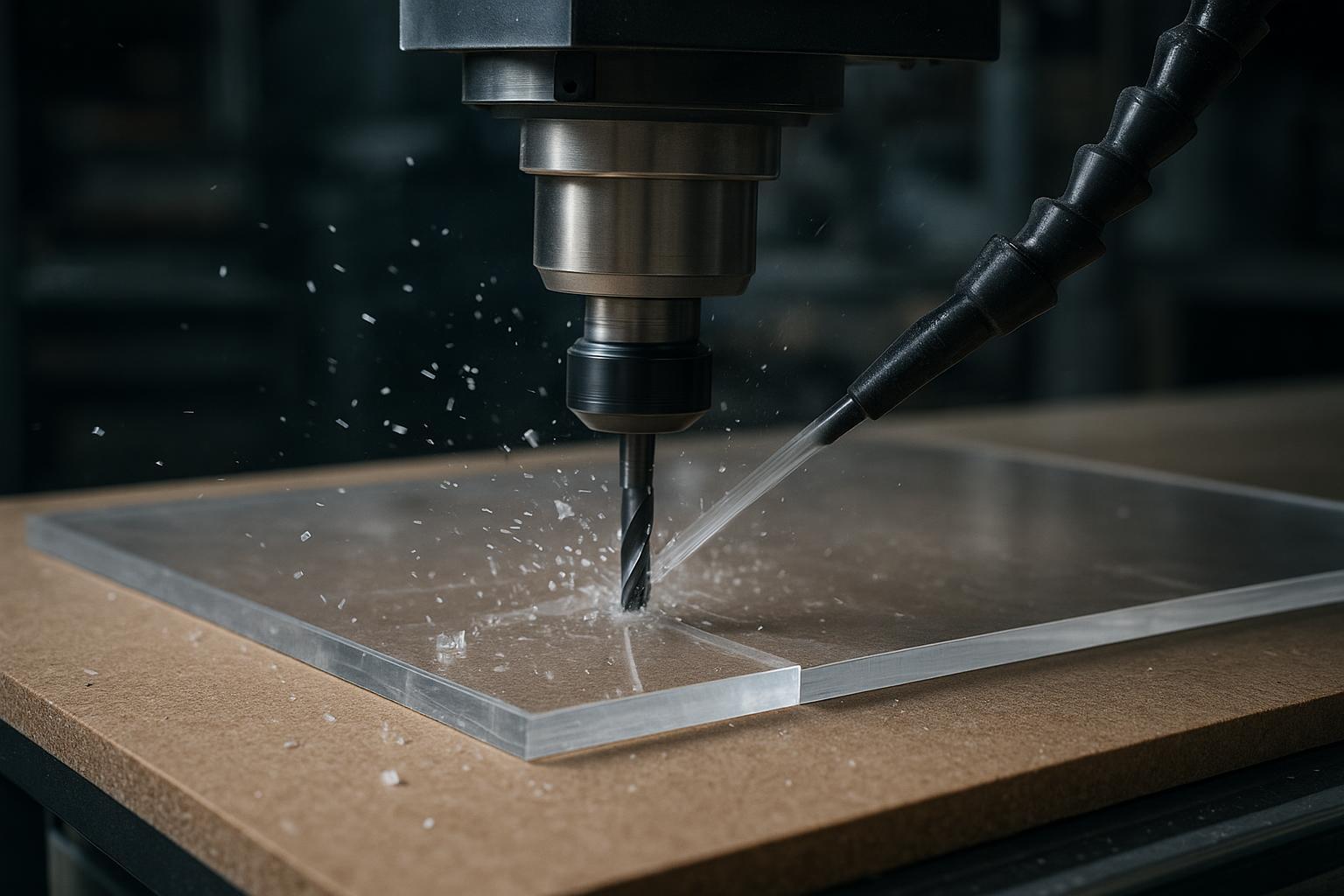
Dust / chips | Typically less than routing | Produces chips and dust; requires dust collection |
Best use cases | Packaging, upholstery, signage boards, gaskets | Cabinet making, door panels, furniture parts, engraving |
If your job is primarily wood panels… don’t force a knife cutter
If you cut MDF cabinet panels, plywood furniture parts, grooves, drill holes, or do 3D carving, a CNC router is the right baseline machine class.
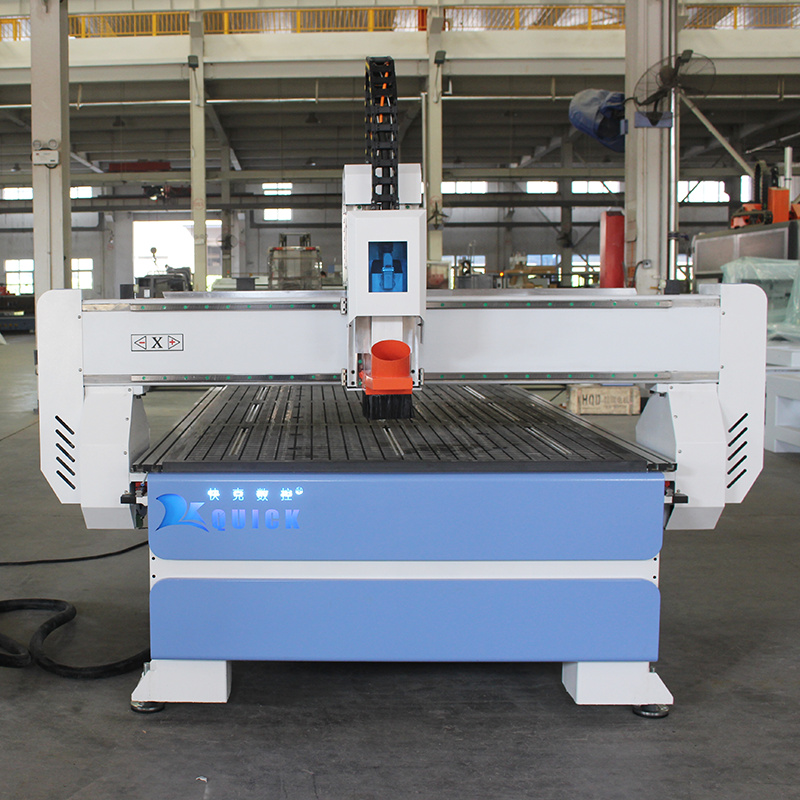
Quick CNC’s CNC router machines cover the typical woodworking and board-processing workflows where a rotating spindle is required.
CNC knife cutter vs laser cutter (when “cleaner” isn’t actually cleaner)
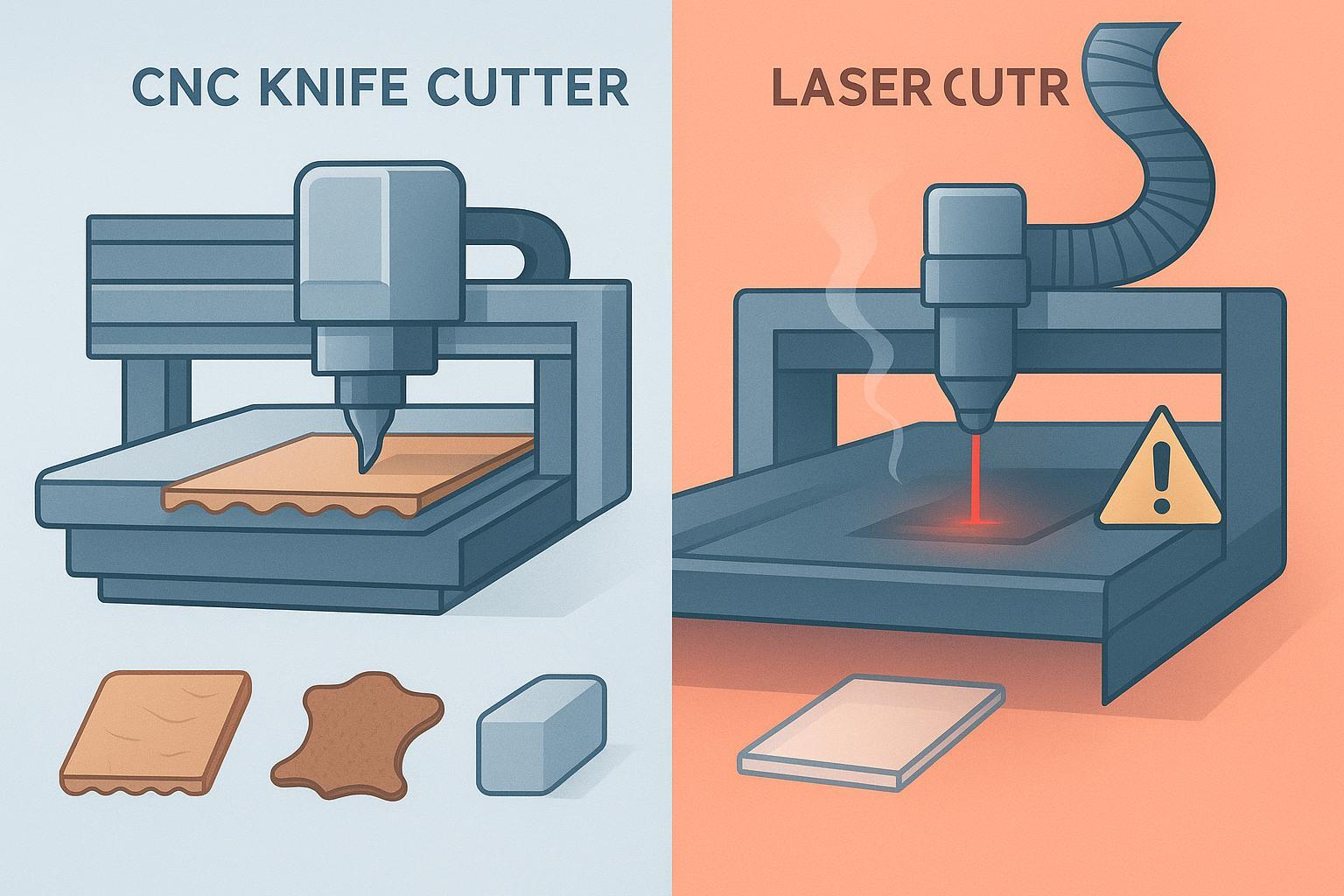
Laser cutters can be excellent for acrylic work and engraving, but they are still thermal cutting.
Comparison item | CNC knife cutter | Laser cutter |
|---|---|---|
Cutting method | Cold blade cutting | Thermal cutting (heat) |
Smoke / fumes | Usually less smoke; no burn edge on many materials | Can produce smoke/odor/fumes depending on material |
Edge effect | No heat-affected zone on many soft materials | Can leave dark edges, melting, or discoloration |
Corrugated cardboard | Clean cut + creasing workflow | Risk of burn marks and edge darkening |
PVC-based sheets | Often preferred method | Generally unsafe; avoid laser cutting PVC/vinyl |
Acrylic letters | Usually not first choice | CO2 laser often performs well for acrylic |
⚠️ Warning: Many laser safety guides and manufacturers warn against laser cutting PVC/vinyl because it can generate corrosive and harmful chlorine-containing fumes. Thunderlaser USA explains this clearly in “Can I Cut Vinyl/PVC In A Laser?”.
Application guide: which industries benefit most (and why)
1) Packaging: cut + crease custom corrugated boxes on demand
If you frequently build non-standard packaging—especially in furniture, cabinetry, and made-to-order products—manual carton cutting becomes a bottleneck.
With a knife tool plus creasing wheel, a CNC knife cutting system can:
- Cut box blanks from flat corrugated sheets
- Score fold lines for consistent folding
- Speed up packaging prototyping and small-batch packaging runs
FEFCO (the European Federation of Corrugated Board Manufacturers) outlines the corrugated packaging production process, which highlights how corrugated board is produced as flat board and then converted through cutting and related operations.
Why this matters for cabinet and furniture factories:
You’re not using a knife cutter to cut your MDF carcasses. You’re using it to produce the materials around the job: packaging boxes, foam protection, and sometimes PET acoustic or decorative panels.
2) Sign making & advertising: a material-to-machine decision grid
Sign and display work often mixes materials that behave very differently under a router bit or a laser beam.
Here’s a practical cheat sheet:
Material / job | Often better choice | Why |
|---|---|---|
Vinyl stickers / labels | Drag knife | Fast, clean kiss-cut workflow |
KT board / foam board | Knife cutter | Cold cutting avoids melting/burning |
PVC foam board | Knife cutter or CNC router | Avoid laser for PVC-based sheets; knife/routing depends on density/thickness |
Acrylic letters | CO2 laser or CNC router | Laser can give clean acrylic edges; router for thicker work |
Aluminum composite panel (ACP) | CNC router | Requires routing capability |
Corrugated cardboard displays | Knife cutter + creasing wheel | Cut outlines + fold lines in one workflow |
MDF signs | CNC router | Rigid wood-based board cutting |
If your shop already owns a router, the “right” answer is often a two-process workflow: router for rigid panels, knife for soft/semi-rigid sheets.
3) Upholstery, leather, and textiles: repeatable cutting without pulling the material
In upholstery and soft furniture, common problems with manual cutting are consistency, skilled-labor constraints, and material waste.
A CNC knife cutter can help when you need:
- Repeatable patterns across many pieces
- Cleaner edges on fibrous textiles
- More consistent nesting/layout than manual marking and cutting
4) Foam inserts and industrial pads: when edge quality and repeatability matter
For foam packaging and industrial pads, blade cutting is often preferred because it avoids heat-affected edges and can cut complex shapes with less distortion.
5) Rubber and silicone gaskets: cut without heat distortion
For some gasket and rubber applications, knife cutting is chosen specifically to avoid thermal effects and to keep edges consistent—especially on materials that can melt, char, or smell under heat.
Myth vs Fact: common CNC knife cutter misunderstandings
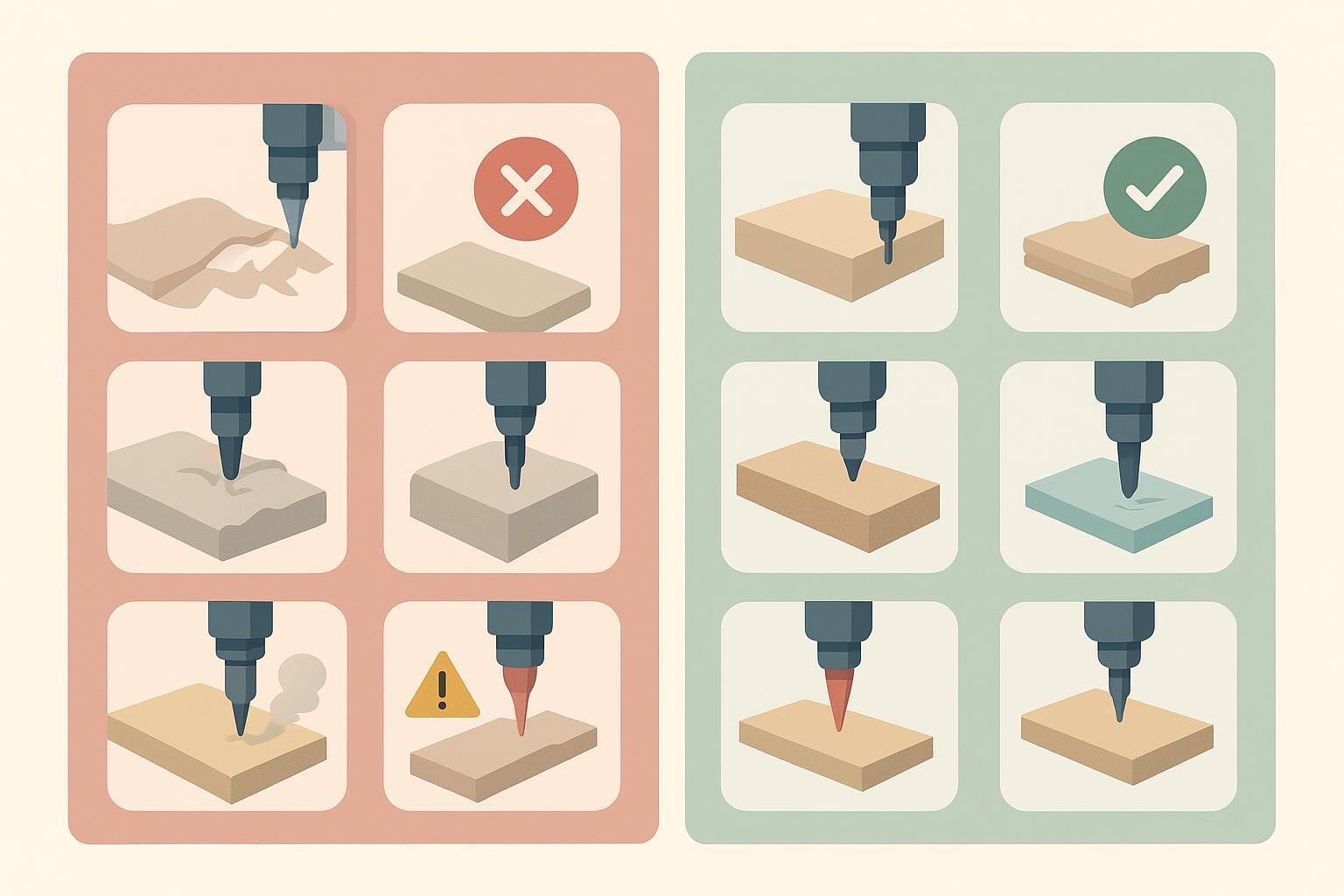
Myth 1: “A CNC router can cut all soft materials if I use the right bit.”
Fact: A router uses a high-speed rotating tool. On soft, flexible, or fibrous materials it may pull the sheet, tear fibers, or distort edges. Knife cutting is purpose-built for slicing these materials instead of milling them.
Myth 2: “A cheap drag-knife attachment is enough for thick foam and packaging.”
Fact: Drag knives shine on thin media (vinyl, films, paper). As materials get thicker, softer, or more fibrous, an oscillating or tangential knife is usually more reliable because it reduces dragging and tearing.
Myth 3: “A laser cutter is always cleaner than knife cutting.”
Fact: Lasers can be very clean on the right materials (like acrylic) but they are thermal. On cardboard, leather, foam, rubber, and some boards, heat can create smoke, odor, discoloration, or melted edges. For PVC-based materials, laser cutting is widely warned against.
Myth 4: “A CNC knife cutter can replace a CNC router for MDF, plywood, and furniture parts.”
Fact: CNC knife cutters are generally not used for structural woodworking—MDF cabinet panels, plywood parts, grooves, drilling, and 3D carving are router jobs.
Myth 5: “Knife cutting is completely dust-free and waste-free.”
Fact: Knife cutting often creates less dust than routing and avoids laser smoke on many materials, but waste still depends on nesting layout, blade condition, and the material itself.
Myth 6: “One knife tool can cut every material.”
Fact: Foam, rubber, leather, cardboard, textiles, PET panels, and PVC foam board may require different blades, angles, oscillation settings, and hold-down methods.
Myth 7: “Packaging automation is only for large factories.”
Fact: Any shop that frequently cuts custom-sized boxes, foam inserts, displays, or protective packaging can benefit—especially when manual cutting is repetitive, inconsistent, or a safety risk.
Buying guide: how to choose the right CNC knife cutting machine
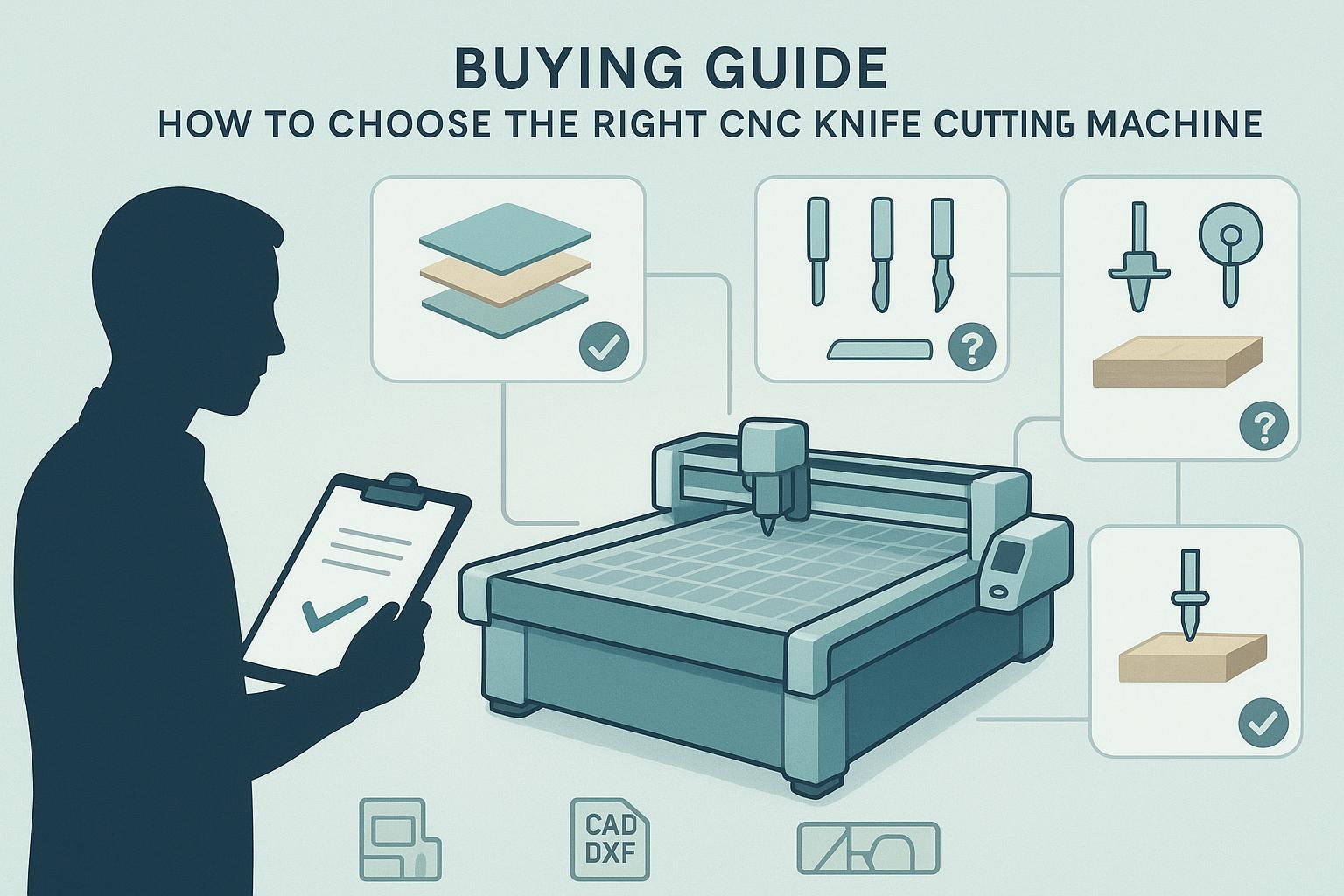
Use these questions to shortlist machines without getting trapped in spec-sheet marketing.
1) Start with your materials (not the machine)
- What are your top 5 materials by volume?
- Are they flexible, fibrous, or semi-rigid?
- Do you need clean folds (packaging) or just cut edges?
2) Choose tooling based on thickness and behavior
- Thin vinyl/films → drag knife
- Thicker foam/cardboard/textiles → oscillating knife
- Tight corners/thicker technical materials → tangential knife
- Corrugated packaging blanks → creasing wheel is a must-have
3) Confirm hold-down and workflow details
- Vacuum table or other workholding options?
- How are patterns imported (DXF/PDF/AI)?
- Is nesting supported (to reduce offcut waste)?
4) Be honest about your “hard material” needs
If you routinely cut rigid boards, you may need a CNC router in the workflow.
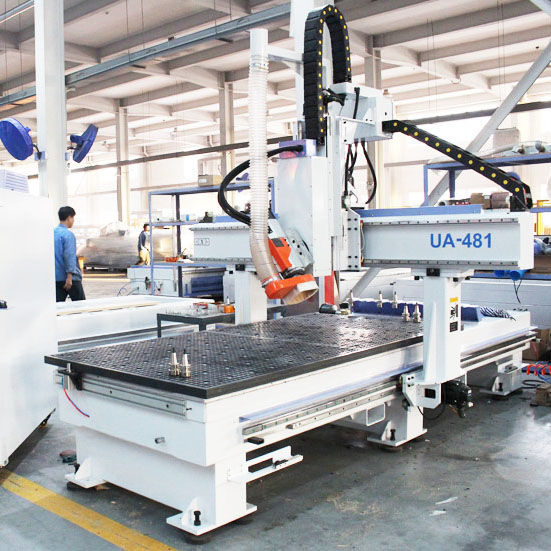
For woodworking and panel processing, a router platform such as a 1325 wood CNC router or a 12-tool linear ATC CNC router is typically the correct foundation.
Next steps (if your work spans both soft sheets and rigid boards)
If you’re already doing cabinetry, furniture panels, or sign boards with a router—but you keep outsourcing (or hand-cutting) packaging, foam protection, leather/fabric, or PET acoustic materials—a knife cutting workflow can be a practical second capability.
To explore equipment categories and typical configurations, you can browse Quick CNC’s product overview and their furniture CNC machine category to understand how different CNC systems map to real factory materials.