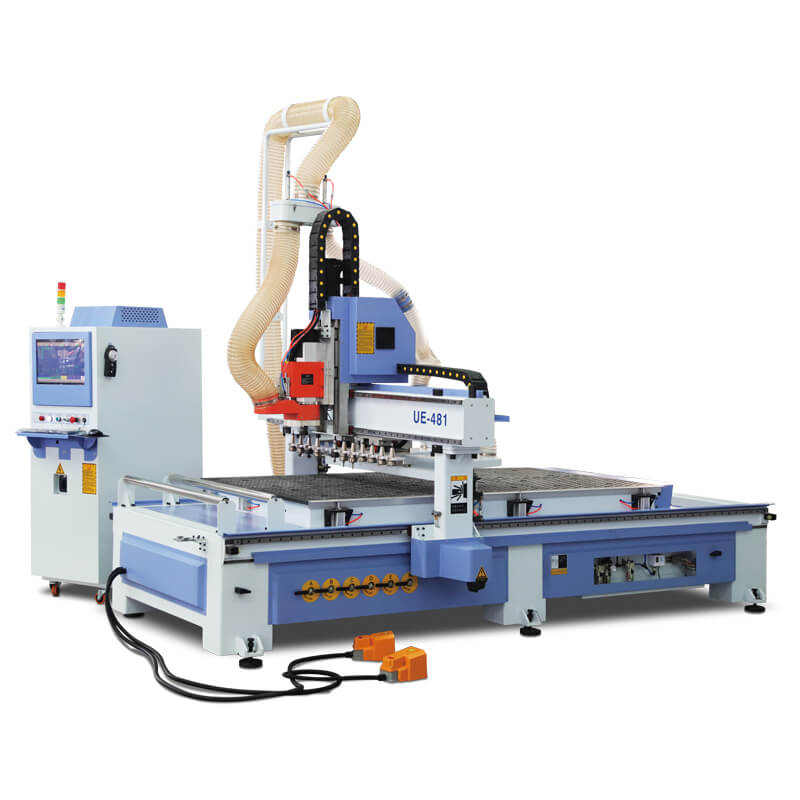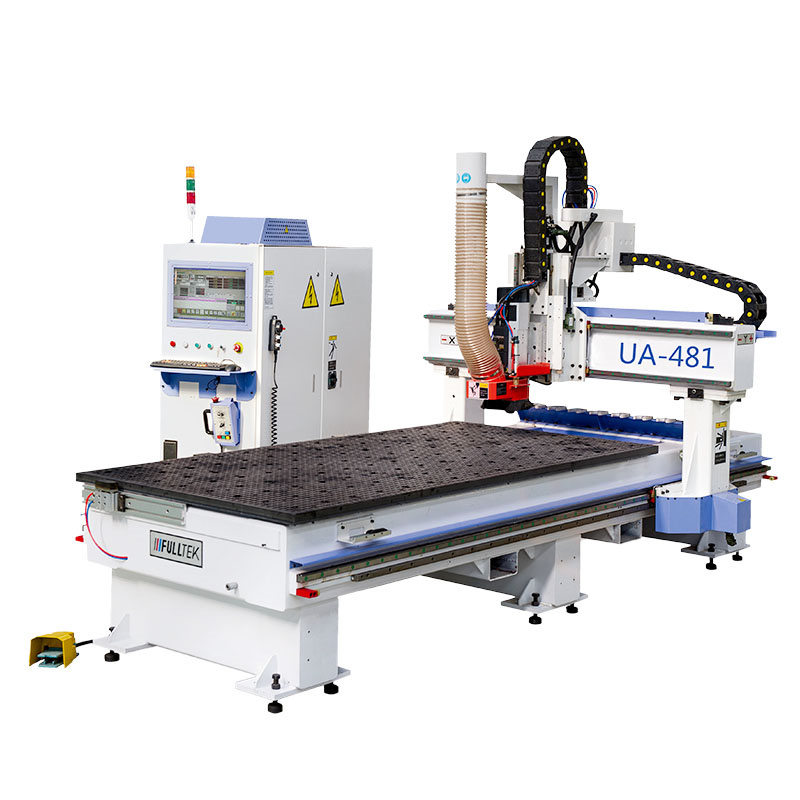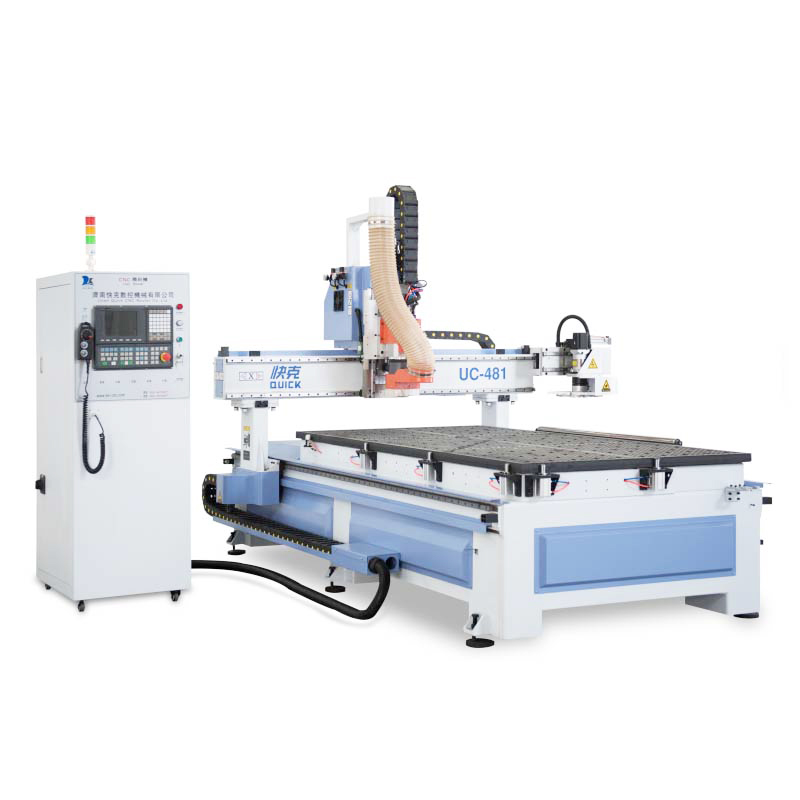
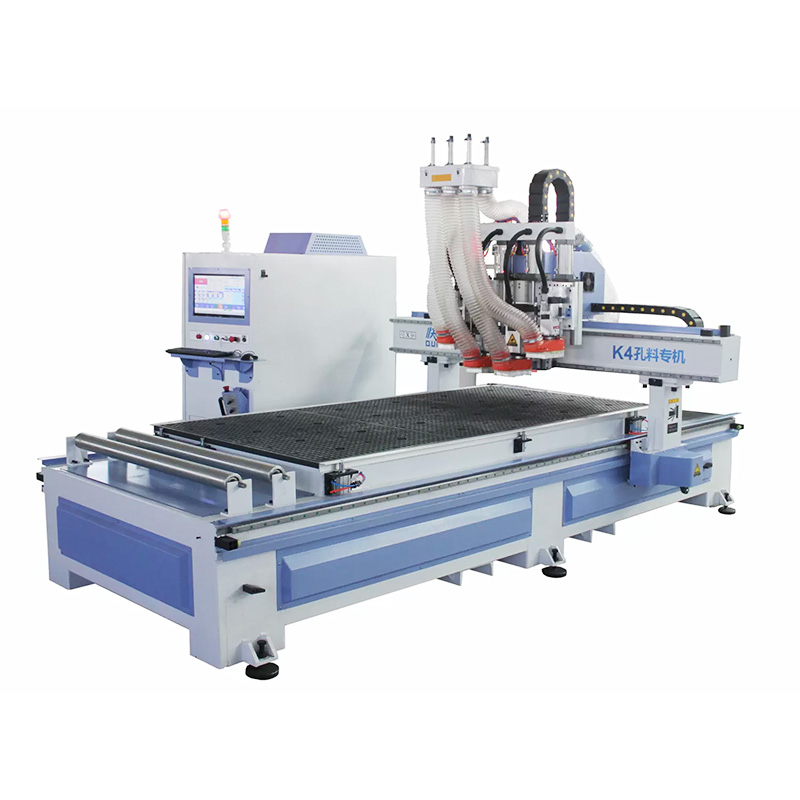
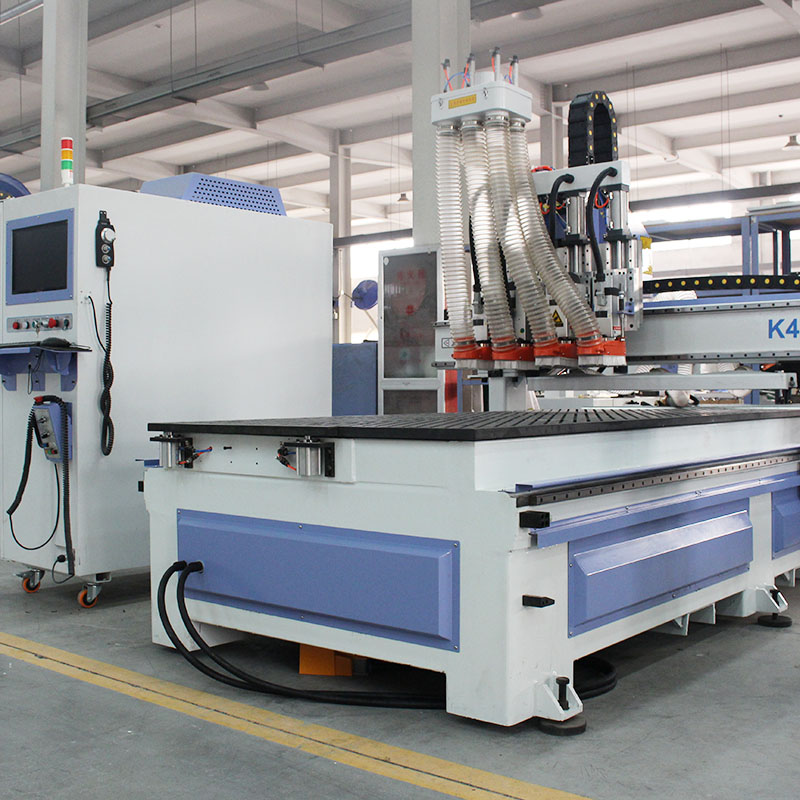
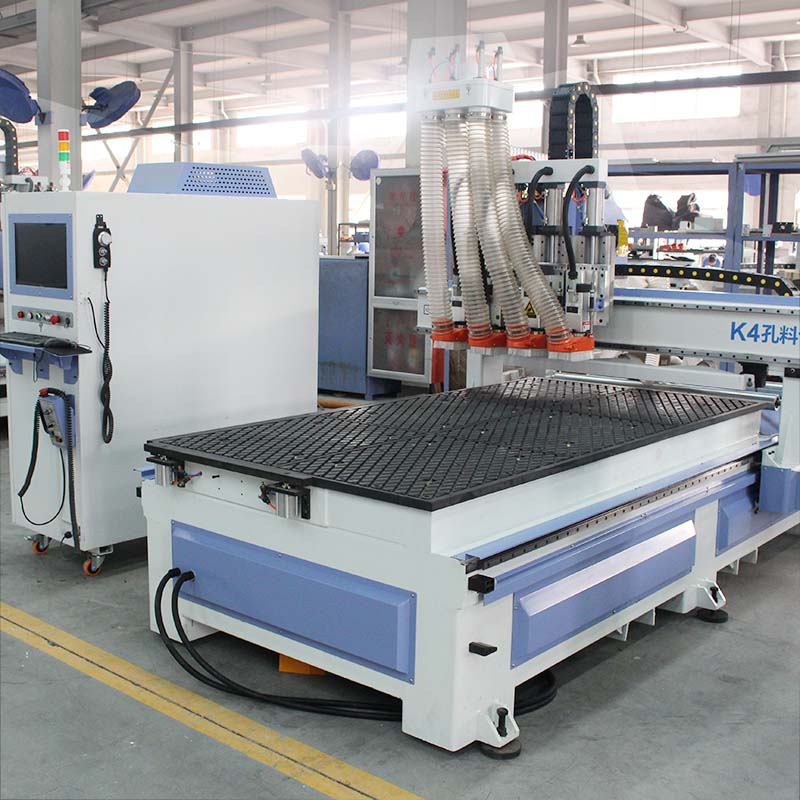
This multi-head CNC router is designed for cabinet and furniture factories that need several machining processes on one machine. It uses 4 spindles, allowing different tools to be prepared for cutting, grooving, drilling, side milling, and sawing work.
Unlike a standard single-spindle CNC router, this K4 model focuses on fast spindle switching rather than manual tool changes. Four independent inverters control the four spindles, helping the machine switch between prepared tools quickly.
Need Faster Tool Switching for Cabinet Production?
If your cabinet production needs repeated cutting, grooving, drilling, and side milling, a single-spindle router can slow the workflow down.
This multi-head CNC router lets you prepare several tools on different spindles, so your machine can move through common cabinet production steps with fewer manual tool changes. The K4 uses 4 spindles, including 2 spindles for cutting and grooving and 2 spindles for drilling holes.
How This K4 Helps You Handle Multiple Processes
The K4 is built for workshops that need more than simple cutting. It can carry 4 different tools for step-by-step processing, including routing, row drilling, cutting, side milling, and sawing.
This is different from a standard single-spindle CNC router. You can prepare several tools in advance and switch between spindles quickly during production.
It is also different from a full ATC CNC router. The value here is not a tool magazine, but fast use of several prepared spindles for repeated cabinet and furniture processes.
Is This Multi-Head CNC Router Right for Your Workflow?
This machine makes sense if your daily jobs often use the same group of tools. For example, cabinet panels may need cutting, grooving, drilling, and side milling.
If most of your work uses only one cutter, a single-spindle router may be enough. But if you repeat several processes every day, this multi-head CNC router can help reduce setup time and make production smoother.
A good fit for:
- Cabinet production workshops
- Panel furniture factories
- Wood door manufacturers
- Furniture component producers
- Shops doing cutting and grooving together
- Buyers needing faster tool switching
- Factories upgrading from a single-spindle router
How It Works in Cabinet Panel Production
Cabinet production is rarely just straight cutting. One panel may need grooves, holes, slots, side milling, and shaping before assembly.
With four prepared spindles, this machine can handle repeated cabinet panel steps more efficiently. That makes it useful for cabinet panels, wardrobe parts, doors, shelves, and panel furniture components.
Typical cabinet workflow:
- Cut panel shape
- Drill or machine holes
- Create grooves or slots
- Process side milling
- Add simple decorative work
- Prepare parts for assembly
Key Features of This Multi-Head CNC Router
4-spindle machining structure
This machine uses 4 spindles for different processing needs. The reference page states that 2 spindles are used for cutting and grooving, while 2 are used for drilling holes.
For cabinet production, this is practical because different operations can be arranged before machining starts.
Fast spindle switching
Four independent inverters control the four spindles. The page describes this setup as allowing quick switching between spindles.
This helps reduce downtime when the job needs different tools.
1220 × 2440 mm working area
The listed working area is 1220 × 2440 × 200 mm. This makes the machine suitable for 4×8-class board processing, cabinet panels, wood doors, and furniture parts.
For cabinet factories, this size is practical for common panel furniture production.
Syntec control system
The machine uses a Syntec controller. The reference page describes Syntec as compatible with different CAD/CAM software and easier to operate and maintain.
For buyers, the control system matters because multi-spindle work depends on stable operation and clear tool control.
Yaskawa servo motor
This K4 model uses Japan Yaskawa servo motors. The reference page highlights high accuracy, fast response, and high load capacity compared with stepper motors.
That helps support more stable performance in furniture production.
Vacuum table with 7.5kW pump
The machine uses a vacuum table with a 7.5kW pump. This helps hold panels during cutting, grooving, and drilling.
For cabinet panels, stable board holding directly affects machining quality.
What You Can Process with This Machine
This machine is designed for diversified wood furniture processing, especially where one product needs more than one operation.
The K4 is suitable for router work, row drilling, cutting, side milling, and sawing. It is also used in wood furniture applications such as doors, cabinets, tables, chairs, wave plates, and fine patterns.
Main processing tasks:
- Cabinet panel cutting
- Grooving
- Drilling holes
- Side milling
- Sawing
- Wood door processing
- Furniture component machining
- Simple decorative routing
- Panel furniture production
Typical Applications
Cabinet production
This is the best page direction for the keyword. Cabinet panels often need cutting, grooves, and holes before assembly.
A multi-head CNC router helps prepare several tools and reduce tool-change time during repeated cabinet panel processing.
Panel furniture
Panel furniture production often involves repeated board processing. The K4 machine is positioned as a high-efficiency device in the wood furniture field.
That makes it suitable for furniture factories that need practical multi-process production.
Wood doors
Wood doors may need cutting, grooving, and drilling. With four spindles, the machine can support more than one operation without stopping for every tool change.
This is useful when door designs repeat across batches.
Tables, chairs, and wood furniture parts
The reference page lists doors, cabinets, tables, chairs, wave plates, and fine patterns under wood furniture applications.
These applications support the broader use of the machine beyond cabinet panels.
Signs and acrylic work
The machine can also support signage, logos, display boards, acrylic engraving, and acrylic cutting. These are listed in the reference application section.
Still, the main page focus should stay on cabinet production and multi-head woodworking.
Multi-Head CNC Router vs ATC CNC Router
An ATC CNC router uses a tool magazine and automatic tool changing. It is useful when many tools are needed and production programs vary widely.
A multi-head CNC router works differently. It prepares several spindles with different tools, then switches between them quickly during processing.
For cabinet production, a multi-head CNC router can be a practical choice when your jobs often use a fixed set of tools. If you need many different tools across complex jobs, ATC may be better.
Why Cabinet Shops Choose This K4 Machine
Choose this K4 machine if your cabinet production needs more than a single-spindle router, but you do not always need a full ATC system.
It gives you 4 prepared spindles, Yaskawa servo motors, Syntec control, and a 4×8-class vacuum table. The reference page also states that double-station configuration is available.
This makes it practical for repeated cabinet panel work, furniture parts, and production jobs that use a fixed group of tools.
Specifications
| Item | Specification |
|---|---|
| Model | K4 |
| Machine Type | Multi-Head / 4-Spindle CNC Router |
| X-Y-Z Working Area | 1220 × 2440 × 200 mm |
| Machine Size | 2400 × 3200 × 1900 mm |
| Repositioning Resolution | 0.02 mm |
| X-Y Movement | Rack and pinion, gear drive |
| Z Movement | Ball screw drive / Taiwan |
| Guide | Linear 25 square / Taiwan |
| Max. Speed | 45,000 mm/min |
| Max. Cutting Speed | 35,000 mm/min |
| Spindle 1 | 6kW HSD spindle, 18,000 rpm |
| Spindle 2 | 6kW China spindle, 18,000 rpm |
| Spindle 3 & 4 | 2.2kW China spindle, 18,000 rpm |
| Reducer | France |
| Drive Motors | Yaskawa servo motor 850W |
| Working Voltage | AC380V / 50–60Hz / 3-phase |
| Command Code | G code |
| Computer Interface | USB 2.0 |
| Table | Vacuum table with 7.5kW pump |
| Software | Free Alphacam |
| Controller | Syntec |
Main Components and Advantages
Four-spindle setup
The four-spindle setup is the main reason to choose this machine. It allows different tools to be prepared for different processing steps.
For cabinet production, this is useful when cutting, grooving, and drilling appear often in the same workflow.
Syntec controller
The Syntec controller supports the machine’s multi-spindle operation. It also helps make operation and maintenance more manageable for production users.
For a multi-head CNC router, stable control matters because each spindle must be called correctly.
Yaskawa servo motor
The machine uses Yaskawa servo motors with high accuracy, fast response, and high load capacity.
This gives the machine stronger motion performance than a basic stepper-based router.
Heavy-duty bed
The reference page describes the machine with a heavy-duty bed. This matters because multi-process cabinet production needs a stable machine structure.
A stronger bed helps support cutting, grooving, and drilling work over repeated production.
Vacuum table
The vacuum table helps hold the board during machining. This is especially important when processing cabinet panels and furniture boards.
Stable holding can reduce panel movement and support better machining consistency.
APPLICATION
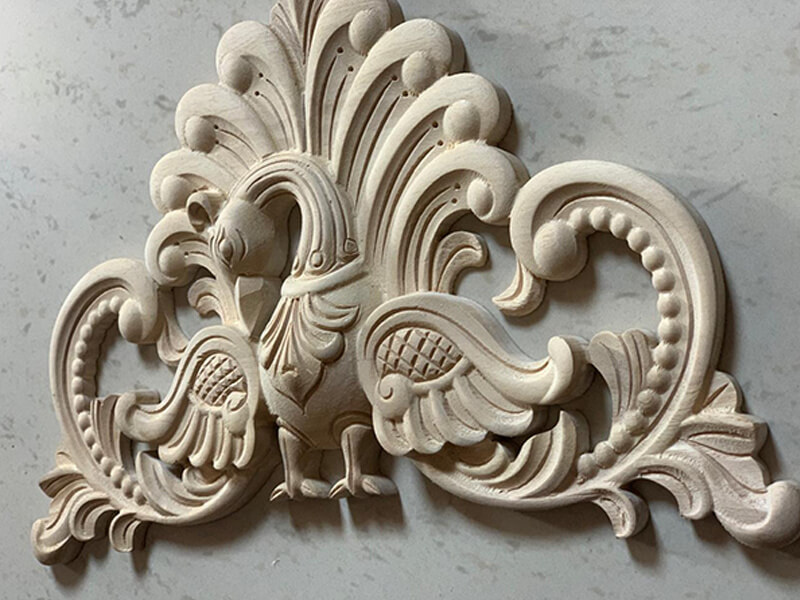
Woodworking
Cutting, carving, engraving for wood products.
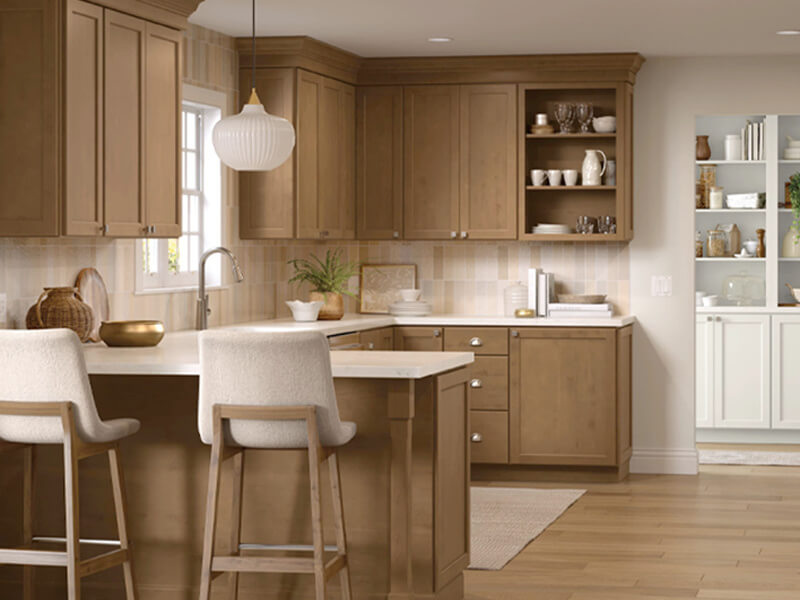
Furniture Production
Cabinetry, doors, panels and custom furniture.
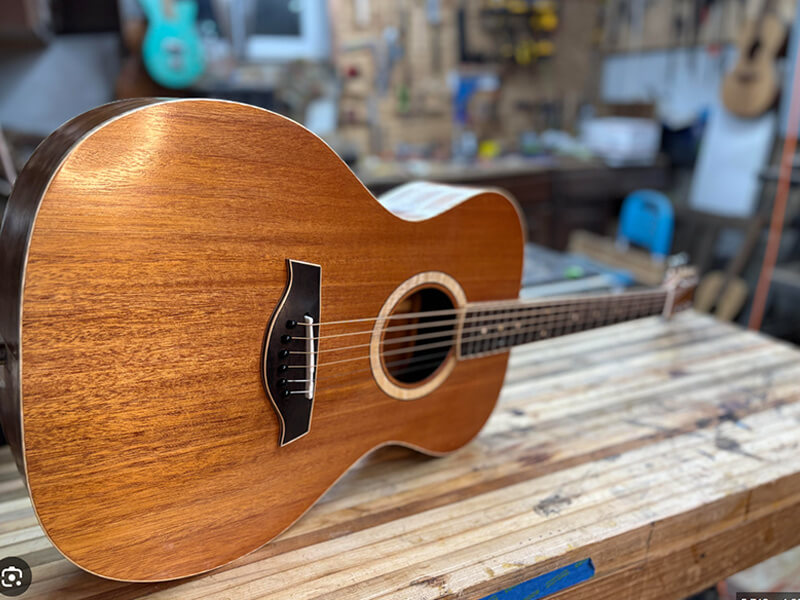
Instrument Making
3D letters, light boxes, signage and logos.
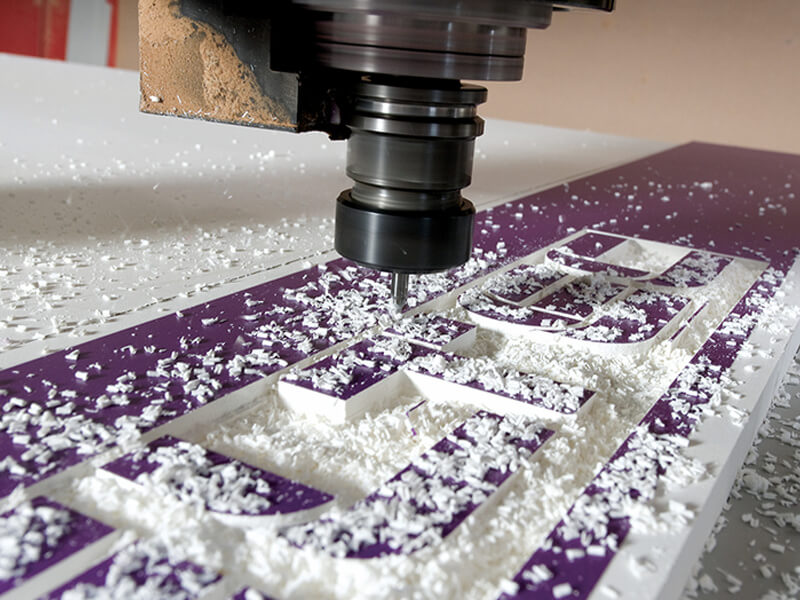
Advertising
Billboards, displays, promotion materials.
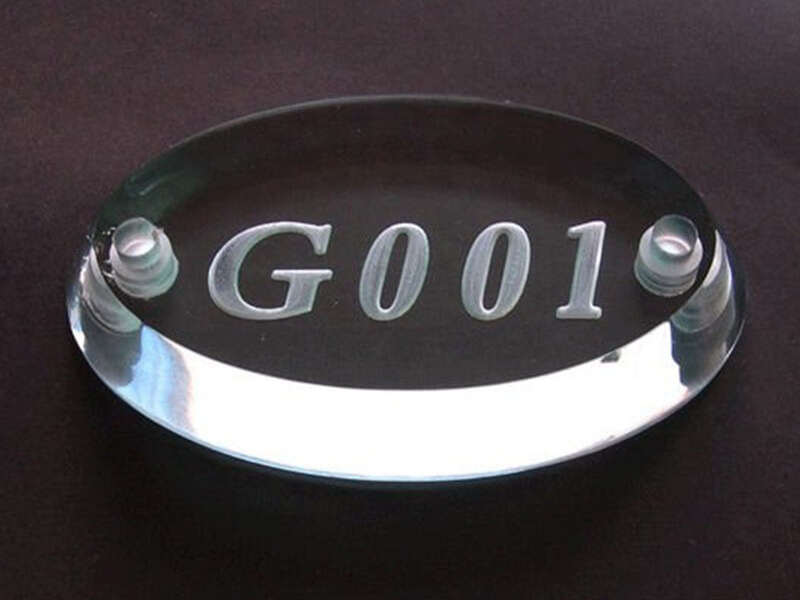
Acrylic & Plastic Processing
Cutting, engraving, polishing acrylic and plastic.

Stone Processing
Granite, marble, quartz cutting and carving.
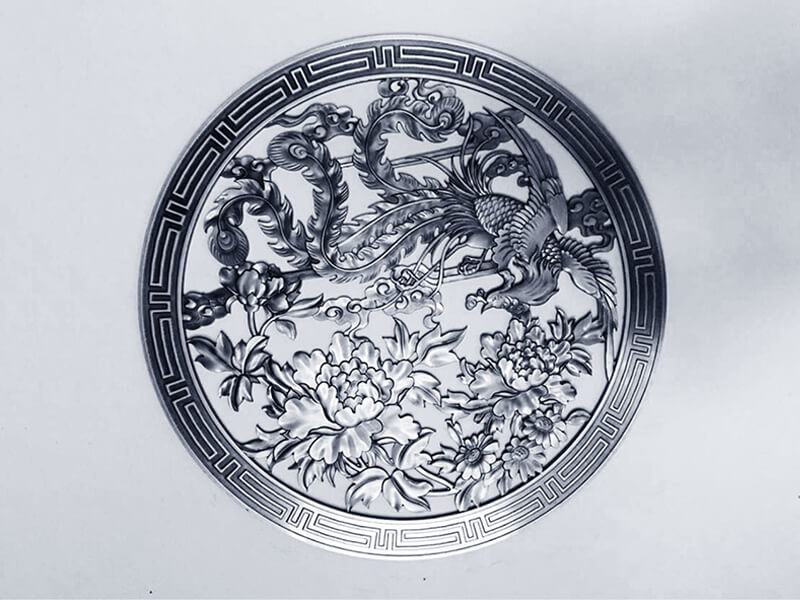
Metal Fabrication
Drilling, milling, cutting metal materials.
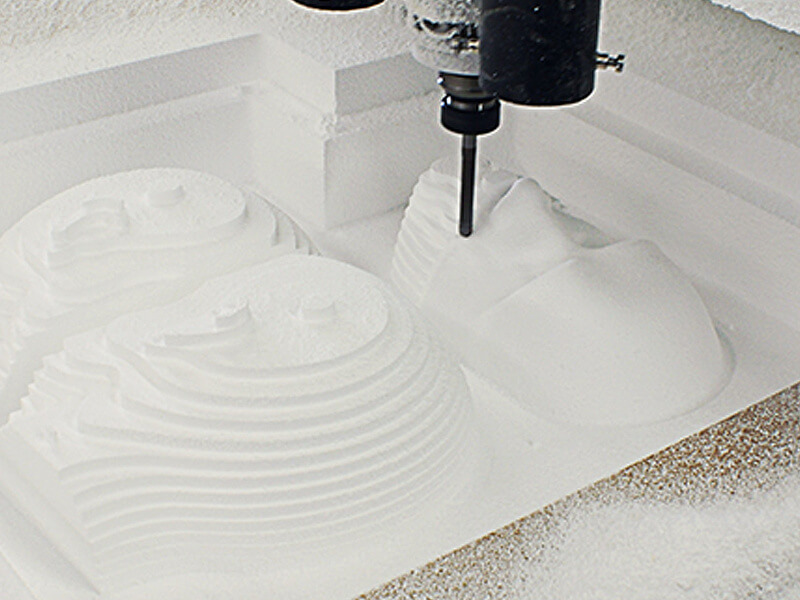
Mold & Prototype Making
Molds, prototypes and precision components.
Why should I choose a multi-head CNC router instead of a normal single-spindle router?
Choose a multi-head CNC router when your cabinet production often needs several tools in one workflow. This K4 model uses four spindles, so different tools can be prepared for cutting, grooving, drilling, and side milling. That reduces manual tool changes and supports faster repeated production.
Is this machine mainly for cabinet production or general woodworking?
It is strongest for cabinet production and panel furniture work, but it can also handle doors, tables, chairs, signs, acrylic, and decorative parts. The main reason to choose it is multi-process woodworking, especially when a cabinet panel needs more than one tool operation.
How is this different from an ATC CNC router?
An ATC CNC router changes tools from a magazine. This multi-head CNC router uses several prepared spindles instead. It is useful when your factory often repeats the same tool combinations. If you need many different tools across many programs, ATC may be more flexible.
What are the four spindles used for?
The reference page says two spindles are used for cutting and grooving, while two are used for drilling holes. This setup fits cabinet and panel furniture production, where cutting, slotting, and hole making often appear in the same production process.
Is the 1220 × 2440 mm working area suitable for cabinet panels?
Yes. The 1220 × 2440 × 200 mm working area is suitable for common 4×8-class board processing. For cabinet panels, wardrobe parts, doors, and furniture boards, this size is practical for many standard production needs.
Does this machine use servo motors?
Yes. The K4 uses Japan Yaskawa servo motors. Compared with stepper motors, servo motors offer better accuracy, faster response, and higher load capacity. This is useful for production users who care about stable repeated machining and better motion performance.
Is this machine suitable for drilling holes?
Yes. Drilling is one of the machine’s intended functions. The reference page says the K4 can handle row drilling, and two of the spindles are used for drilling holes. This makes it practical for cabinet and furniture parts that need repeated hole processing.
Can this machine process acrylic and signage?
Yes, the application section includes signage, logos, display boards, acrylic engraving, and acrylic cutting. However, the strongest page focus should remain on cabinet production and multi-head woodworking, because that is the main keyword direction for this new page.
Is this machine too complex for a small workshop?
It depends on your workflow. If a small workshop repeatedly makes cabinets, doors, or panel furniture with several common tools, this machine can save time. If the work is mostly simple cutting with one tool, a single-spindle router may be more cost-effective.
What should I send before asking for a quote?
Send your main products, board size, material type, typical tool list, and daily output target. If you make cabinets, also send sample panel drawings or machining steps. These details help confirm whether this multi-head CNC router matches your production workflow.