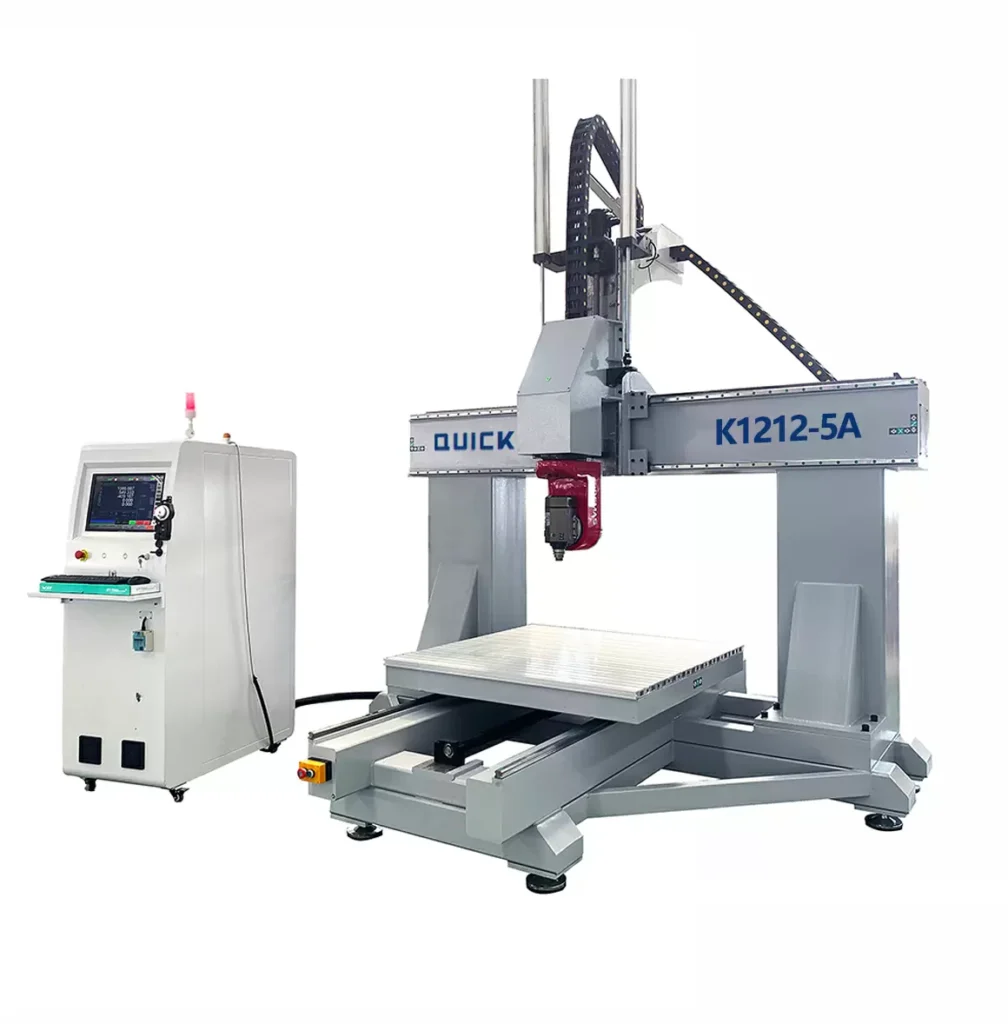
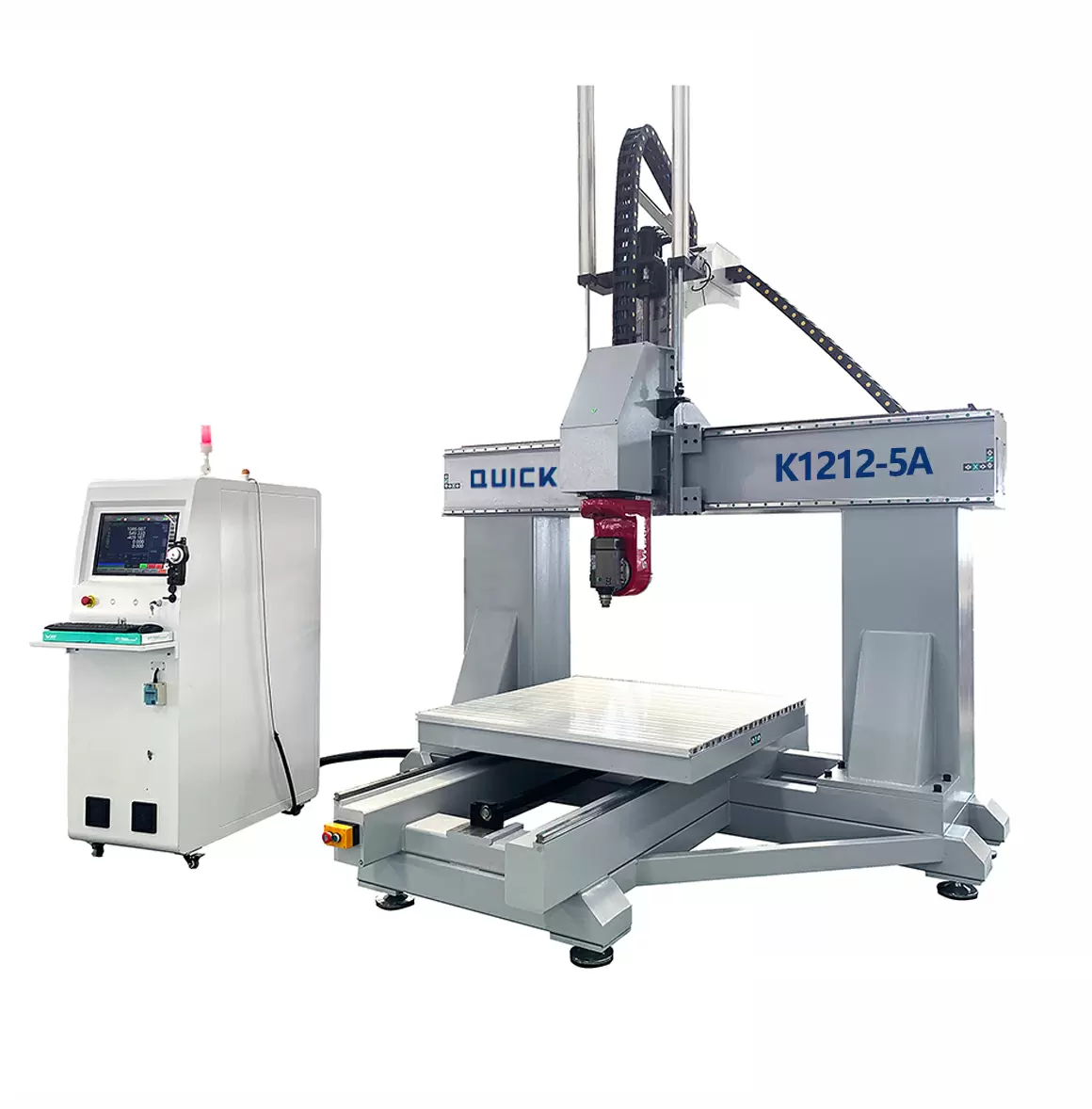
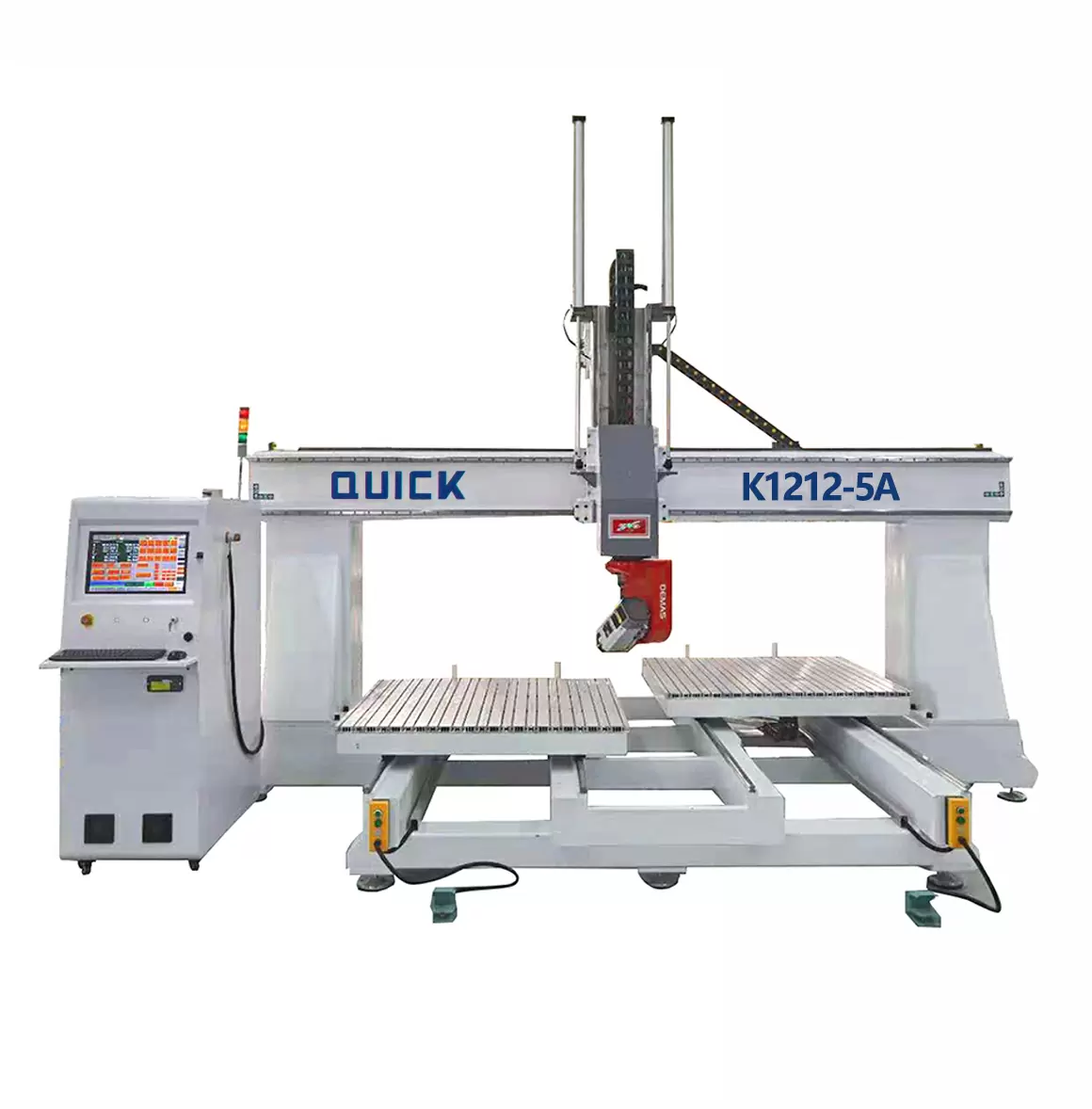
This 5 axis wood CNC router is designed for users who need more than flat cutting or simple angled machining. It can process five sides of a part in one setup, making it much more suitable for mold making, complex 3D parts, and multi-surface machining.
For buyers working with wood molds, sculpture parts, prototype models, and complex shaped components, this machine gives more machining freedom than a standard 3 axis or 4 axis router. Its value is not only speed, but also better access to difficult surfaces.
Do You Really Need a 5 Axis Wood CNC Router?
Not every woodworking shop needs a 5 axis wood CNC router. If your work is mainly flat panel cutting, cabinet panels, or simple engraving, a 3 axis ATC router may be more practical.
But if your work involves molds, curved surfaces, deep cavities, multi-side machining, or complex 3D shapes, a 5 axis machine becomes much more valuable. It helps reduce repositioning and gives the tool better access to difficult angles.
This is why this page should focus on 5 axis wood CNC router for mold making, not only “wood cutting.” The real buyer is usually looking for a solution to complex machining, not a basic woodworking router.
Why This Machine Fits Mold Making
Mold making often requires machining from several directions. A simple 3 axis router may need repeated repositioning, while a 4 axis machine still has limits on how many surfaces it can reach.
This K1212-5A 5 axis CNC router is positioned for five-side machining in one setup. That makes it suitable for large molds, small precision molds, sculpture crafts, and complex components that need more complete surface access.
For mold makers, this can help reduce setup time and improve machining consistency. It is especially useful when the part shape is too complex for standard flat routing.
5 Axis Wood CNC Router vs 4 Axis Wood CNC Router
A 4 axis wood CNC router is useful for angled work, curved surfaces, rotary parts, and some decorative machining. It is a strong choice when the part mainly needs one extra rotational direction.
A 5 axis wood CNC router goes further. It is better for five-side machining, deeper 3D shapes, complex molds, and parts that need tool access from multiple angles.
If your work is mostly curved doors or decorative panels, a 4 axis machine may be enough. If your work involves molds, models, sculptures, and multi-surface machining, this 5 axis CNC router is the better match.
Who This 5 Axis Wood CNC Router Is For
This machine is best for buyers who need to process complex parts instead of simple boards. The main value is five-side machining, not ordinary flat-panel cutting.
It is especially suitable for workshops that make molds, sculpture parts, prototype models, shaped wood components, or complex 3D products. The reference page also lists mold processing, handicraft processing, advertising work, and other advanced fields.
A practical fit for:
- Mold making workshops
- Wood mold manufacturers
- Sculpture and craft producers
- Prototype model makers
- Complex 3D wood part workshops
- Buyers upgrading from 3 axis or 4 axis CNC routers
- Shops that need five-side machining in one setup
What Makes This Product Different
This machine is not just a normal woodworking CNC router with a bigger spindle. It is built around a real 5 axis structure, including a DEMAS 5 axis head, Syntec 5 axis control system, 9kW ATC spindle, and 8-position tool changer.
That makes it different from a standard wood router. It is designed for complex surfaces, multi-angle machining, and mold-related work where tool access matters as much as cutting power.
Another important detail is the table option. According to the products being processed, users can choose one table or double tables. That gives buyers more flexibility when planning their production setup.
Key Features of This 5 Axis Wood CNC Router
1200 × 1100 × 800 mm working area
The working area is 1200 × 1100 × 800 mm. The Z height is much larger than a normal flat-panel router, which makes this machine more suitable for molds, sculptures, models, and deeper 3D parts.
9kW ATC spindle
The machine uses a China 9kW ATC spindle. For complex machining, this matters because mold work and 3D part processing often need multiple tools and stable spindle performance.
DEMAS 5 axis head
The DEMAS 5 axis head is one of the core parts of this machine. It gives the machine the movement flexibility needed for five-side machining and complex surface processing.
Syntec 5 axis control system
The machine uses a Syntec 5 axis control system. The reference page highlights RTCP, multi-five-axis compensation, and several serial communication methods, which are important for serious 5 axis machining.
8-position auto tool changer
The machine includes 8 automatic tool changers. This is useful for mold making and complex part production because one job may need roughing tools, finishing tools, drilling tools, and engraving tools.
Aluminium T-slot table
The aluminium T-slot table is practical for clamping molds, models, and irregular parts. For this type of 5 axis CNC router, flexible fixture setup is often more important than ordinary sheet suction.
What This 5 Axis Wood CNC Router Is Designed to Do
This machine is designed for work that is difficult for simple CNC routers. The reference page says it can process five sides of a part in a single setup, which is a major advantage for complex 3D machining.
It is especially useful when the part has curved surfaces, deep areas, multiple faces, or difficult tool angles. That is why mold making should be the main focus of this page.
Main processing tasks:
- Five-side machining
- Mold processing
- 3D part machining
- Sculpture processing
- Complex surface engraving
- Cutting
- Punching
- Prototype model processing
- Complex shaped component machining
Typical Applications
Mold processing
This is the most important application for this page. The reference page directly says the machine is suitable for large molds, small precision molds, sculpture crafts, and related processing.
For SEO and conversion, this section should stay focused on 5 axis wood CNC router for mold making. That is the clearest reason buyers would choose this machine over a simpler CNC router.
Sculpture and craft production
This machine is also suitable for sculpture crafts and handicraft processing. It can be used for engraving, cutting, and punching on more complex shapes and materials.
This makes the machine useful for workshops that produce solid sculptures, decorative products, and custom 3D parts.
Prototype and model making
The reference page also lists fields such as aircraft models, ship models, and vehicle chassis processing. These are strong examples of complex model work where 5 axis machining can be useful.
For buyers making prototypes or shaped samples, five-side machining can reduce repeated setup and make complicated surfaces easier to process.
Advertising and decorative work
The machine can also be used for two-dimensional and three-dimensional letters, signs, advertising light boxes, signboards, and architectural decoration.
These applications are useful, but they should support the page rather than replace the main mold-making focus.
Materials This Machine Can Process
This machine is mainly positioned around advanced CNC machining, not only ordinary wood cutting. The reference page says its electrospindles can process plastic, resin, compound materials, and aluminium.
For this page, wood and mold-related materials should stay central. Other materials can be mentioned as supporting capabilities.
Suitable material directions include:
- Wood
- Resin
- Plastic
- Compound materials
- Aluminium
- Sculpture materials
- Mold and model materials
Why This 5 Axis CNC Router Makes Sense
This machine makes sense when you need complex machining, not just simple cutting. Its real value is the combination of a 5 axis head, Syntec 5 axis control, 9kW ATC spindle, and five-side machining capability.
For mold making, this combination helps users process more surfaces with fewer setups. That can save time and improve consistency on complex parts.
It also gives buyers table flexibility. Depending on the products being processed, users can choose one table or double tables, which helps match different production needs.
Specification
| Item | Specification |
|---|---|
| Model | K1212-5A |
| X-Y-Z axis working area | 1200×1100×800mm OR 1200×1100×800mm×2 |
| Machine accuracy | 0.2mm |
| Repetition accuracy | 0.0254mm |
| X-Y movement | Rack and pinion, gear drive / Taiwan |
| Z movement | Ball screw drive / Taiwan |
| Guide | Linear 30 square / Taiwan |
| Rack | High precision 1.5M rack |
| Max. speed | 0–40m/min |
| Max. cutting speed | 0–20m/min |
| Spindle power | China 9KW ATC spindle |
| 5 axis head | DEMAS |
| Inverter power | Fulling inverter |
| Tool magazine | 8 pcs auto tool changers |
| Drive motor | Syntec servo motor |
| Table | Aluminium T-slot table |
| Reducer | Shimpo |
| Working voltage | AC380V / 50Hz, 3-phase |
| Command code | G code, u00, mmg, plt, nc |
| Collet | ER32, 3.175–12.7 |
| Controls | SYNTEC 5 AXIS control system |
| Optional | 1. Vacuum table2. Vacuum pump3. Double working table |
Main Components and Advantages
5 AXIS DEMAS head
The DEMAS 5 axis head is one of the core reasons this machine is suitable for complex machining. It supports the machine’s role in five-side processing, mold making, and advanced 3D surface work.
Syntec 5 axis controller
The Syntec controller is a key selling point. The reference page highlights RTCP, multi-five-axis compensation, and flexible communication methods, which are important for true 5 axis machining.
Servo system
The machine uses a Syntec servo motor. The accessories section also describes fast and accurate processing through high-speed serial communication and host controller support.
9kW automatic tool changing spindle
The 9kW ATC spindle supports different machining operations. Combined with the 8-position tool magazine, it helps the machine handle more complex mold and 3D part workflows.
Is This the Right 5 Axis Wood CNC Router for You?
Choose this machine if your work involves molds, complex surfaces, multi-side machining, or advanced 3D components. It is especially suitable when a 3 axis or 4 axis router cannot reach the part surfaces efficiently.
It may not be the best choice if your work is mostly flat panel cutting. In that case, a simpler ATC woodworking router may be more cost-effective.
This product is strongest when its five-axis capability is truly needed.
APPLICATION
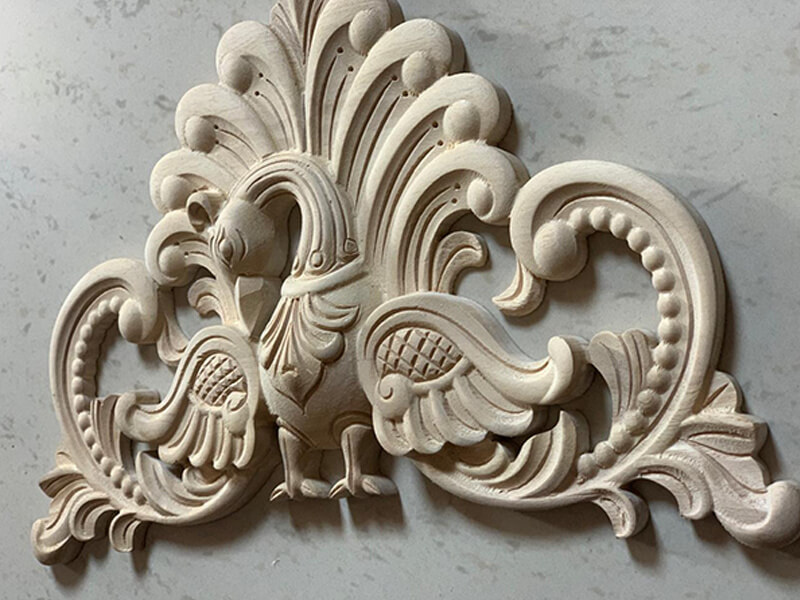
Woodworking
Cutting, carving, engraving for wood products.
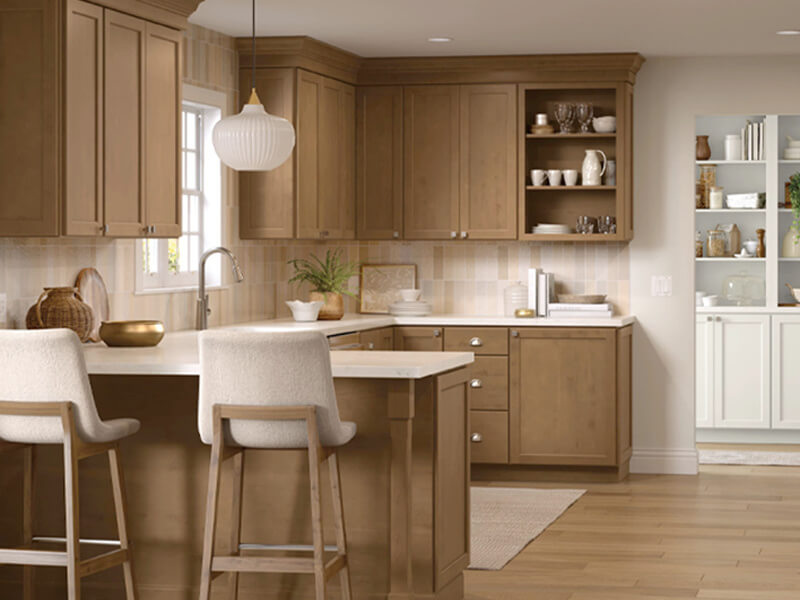
Furniture Production
Cabinetry, doors, panels and custom furniture.
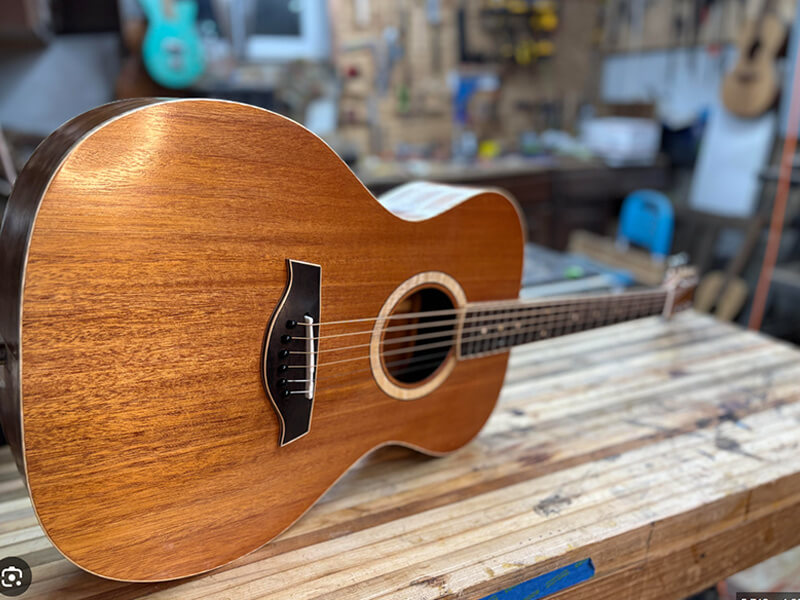
Instrument Making
3D letters, light boxes, signage and logos.
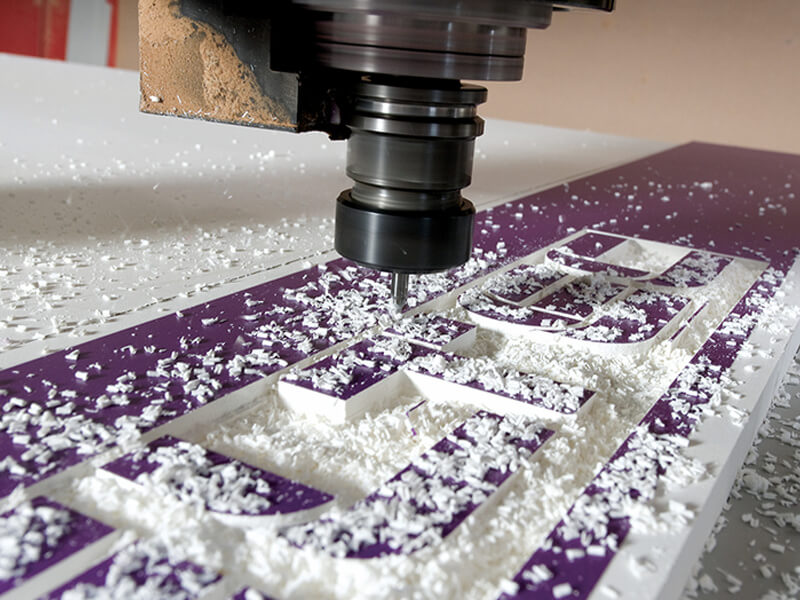
Advertising
Billboards, displays, promotion materials.
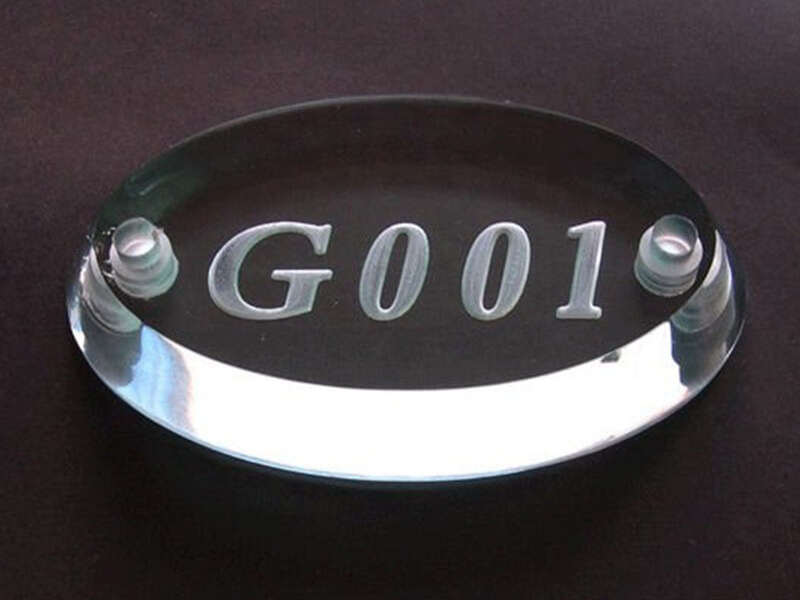
Acrylic & Plastic Processing
Cutting, engraving, polishing acrylic and plastic.

Stone Processing
Granite, marble, quartz cutting and carving.
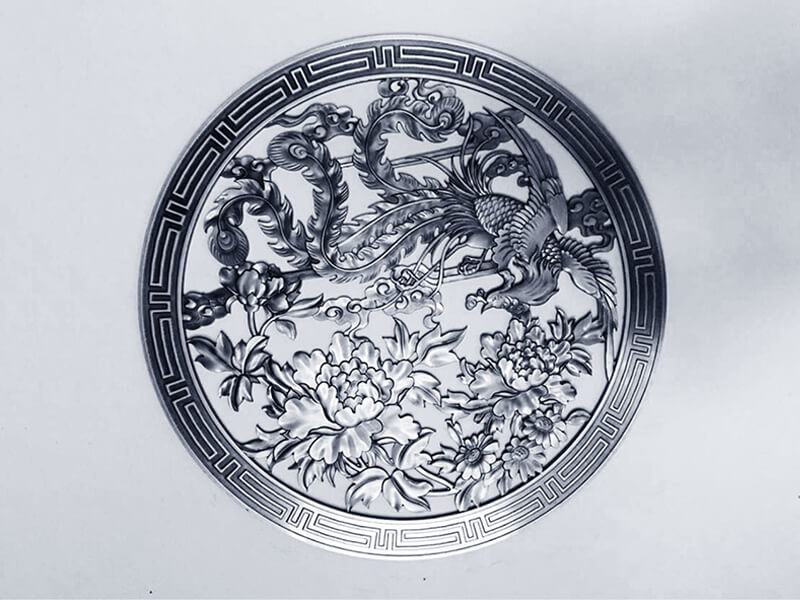
Metal Fabrication
Drilling, milling, cutting metal materials.
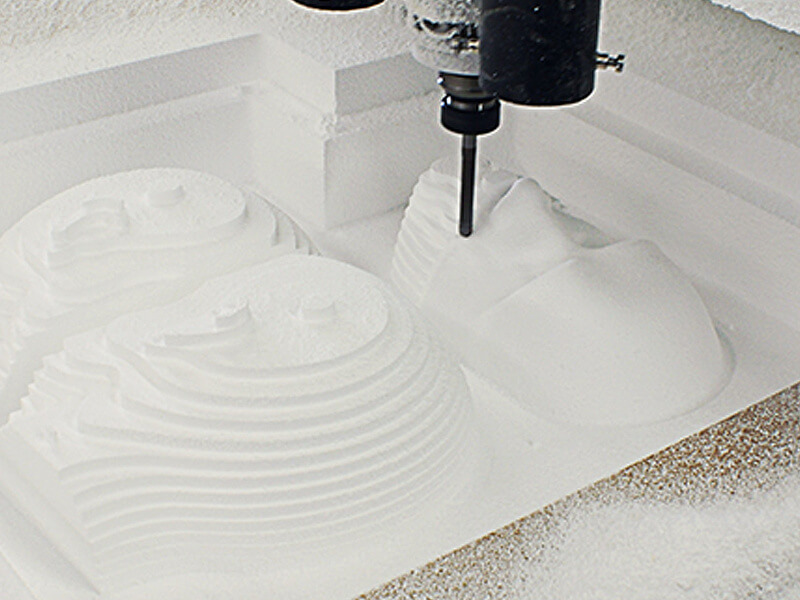
Mold & Prototype Making
Molds, prototypes and precision components.
Is a 5 axis wood CNC router necessary for mold making?
Yes, if your mold has complex surfaces, deep curves, or multiple sides that are difficult to machine with a 3 axis or 4 axis router. For simple flat work, it may be more than you need. For complex mold making, five-side machining is the real value.
What is the main benefit of five-side machining?
The main benefit is reducing repeated repositioning. When the machine can reach more sides of the workpiece in one setup, it helps save time and improves consistency on complex parts such as molds, sculptures, prototype models, and shaped components.
How is this different from a 4 axis wood CNC router?
A 4 axis router is useful for angled or rotary-style work, but a 5 axis wood CNC router gives more freedom for multi-side and complex surface machining. If your main work is mold making or detailed 3D parts, 5 axis is usually the stronger choice.
Is this machine suitable for ordinary panel woodworking?
It can machine wood, but it is not mainly built for basic panel cutting. If your main work is flat boards, a 3 axis ATC router may be more practical. This 5 axis wood CNC router is better for molds, complex 3D parts, and multi-side machining.
What drawings should I send before asking for a quote?
Send your 3D model, material type, workpiece size, required surface quality, and whether you need single-table or double-table production. For 5 axis mold making, drawings are much more useful than only asking for a general machine price.
Is the Syntec 5 axis control system important?
Yes. For 5 axis machining, the control system is very important because it affects toolpath control, compensation, and machining stability. This machine uses a Syntec 5 axis control system, which supports the product’s positioning as a serious 5 axis CNC router.
Does the auto tool changer matter for mold making?
Yes. Mold making often needs several tools for roughing, finishing, engraving, or detail work. The 8-position auto tool changer helps reduce manual tool changes and makes complex machining more efficient, especially when one job needs multiple machining steps.
Can this machine process materials other than wood?
Yes. The reference page says the spindle can machine plastic, resin, compound materials, and aluminium. However, this page should still focus on wood molds, complex wood parts, and mold-making applications because that is the target keyword direction.
Should I choose one table or double tables?
That depends on your production needs. If you mainly process one large or complex part at a time, one table may be enough. If you want better loading and processing flow, double tables may help. The reference page says both options are available.
Is this machine suitable for small workshops?
It depends on the work type, not just shop size. If a small workshop makes complex molds, sculptures, or 3D prototypes, this machine may be valuable. If the work is mostly simple cutting or flat panels, it may be too advanced for the actual need.